
Glaciem IN ACTION
Glaciem’s projects demonstrate how fully electric CO₂ heat pumps, thermal energy storage and advanced refrigeration systems perform in real operating environments.
Across commercial HVAC retrofits, industrial process heat electrification, cold chain facilities and renewable integrated thermal storage, these installations show how engineered solutions work in practice — delivering reliable heating, cooling and refrigeration while reducing reliance on fossil fuels.
View our projects below
Baida wingfield sa
Application:
Process Heating
Sector:
Food Product Manufacturing
Technology:
R744 (CO2) Heat Pump
date:
2025
As part of their decarbonisation strategy, the Baiada Poultry site in Wingfield, South Australia, were looking to electrify their processes by reducing the use of natural gas boilers. The Baiada site had four natural gas fired hot water condensing boilers.
The boilers are used to meet the scalder water and washdown requirements by generating 90°C hot water that is used for indirect heating through multiple circuits and heat exchangers.
Glaciem has successfully designed and manufactured a high-efficiency 1800 kW CO₂ multi mode heat pump, capable of meeting the sites requirements by delivering hot water at temperatures up to 80 °C. The unit was delivered to our client in Adelaide on 30 September 2025. This heat pump will be replacing the existing hot water gas fired boilers.
In addition to hot water generation, the system simultaneously provides up to 450 kW of chilled glycol between -4 °C and -8 °C. The primary heat source for this system is the heat rejection from an ammonia refrigeration plant, making it a highly efficient and sustainable solution.
our solution:
View timelapse here:
View finished project here:
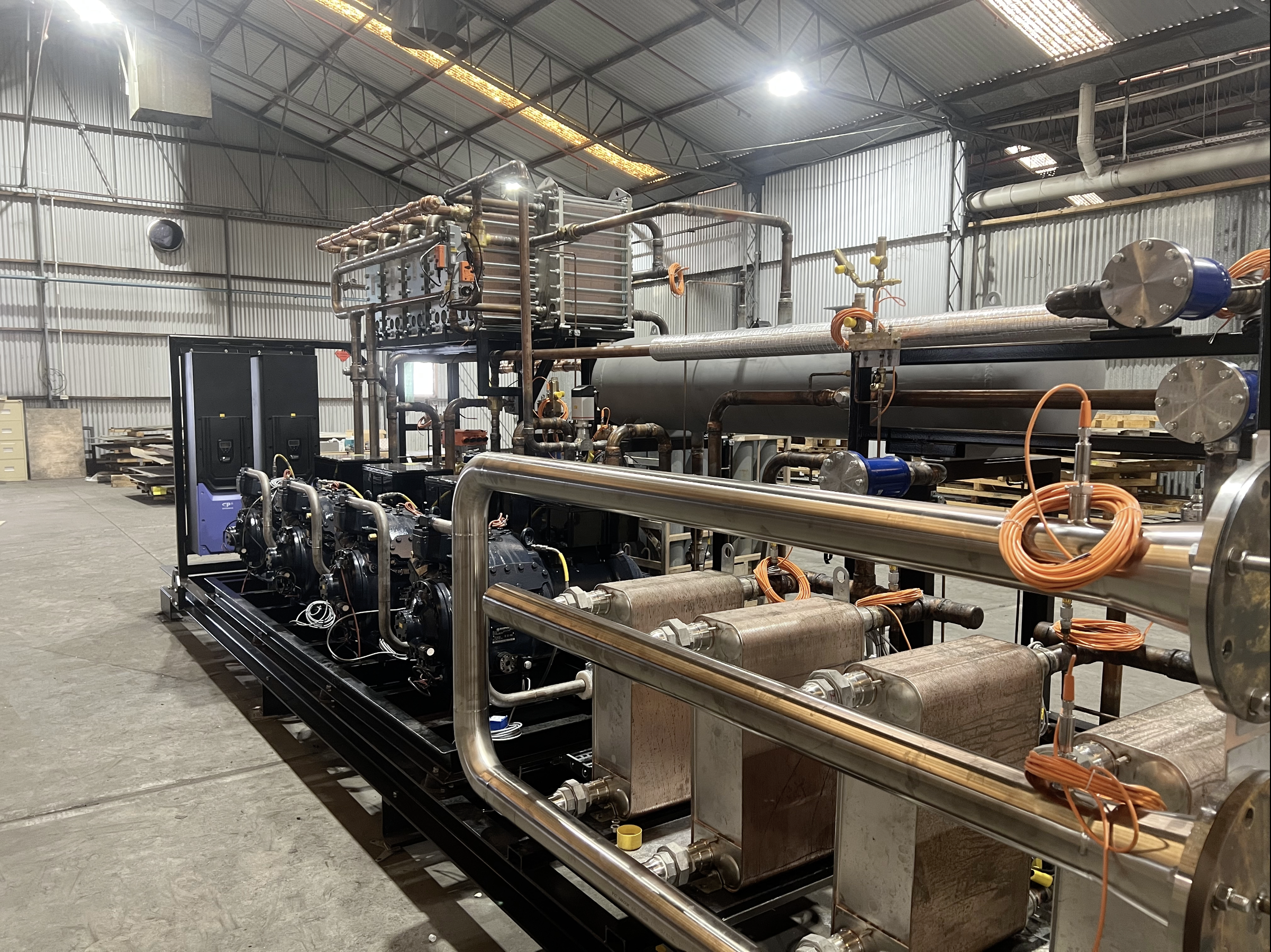
Mode-1 Heating Capacity 1400kW
Cooling Source-1
Cooling Source-2
Mode-2 Heating Capacity 1800kW
Cooling Source-2
Coles Norwood adelaide
Application:
Airside Heat Exchanger
Sector:
Food Product Manufacturing
Technology:
Dew Point CO₂ Cooling (DPCO₂)
date:
2023
Supermarkets across Australia are transitioning away from synthetic refrigerants to lower‑emissions R744 (CO₂) systems. While CO₂ offers strong environmental benefits, its efficiency drops significantly in higher ambient climates — especially during peak summer conditions. This creates higher energy consumption, increased peak demand, and operational challenges for stores aiming to reduce emissions while maintaining reliable refrigeration and air conditioning performance.
Supported through AusIndustry and the Coles Innovation Fund, Glaciem’s patented Dew Point CO₂ (DPCO₂) cooling system was integrated into the existing transcritical CO₂ refrigeration and air‑conditioning plant at Coles Norwood. This world‑first application enhances the performance of standard CO₂ systems in high‑ambient conditions by reducing gas cooler outlet temperatures and increasing overall cycle efficiency.
The system was designed to support freezing, refrigeration and air‑conditioning loads, with modelling targeting a 12% reduction in annual electricity consumption and more than a 32% reduction in peak electrical demand.
Following installation, the system was independently monitored by the University of South Australia (UniSA). The results show a 19.6% reduction in total refrigeration electricity consumption compared to an adiabatic CO₂ system, with the DPCO₂ unit operating in subcritical mode for the majority of the year — even on the hottest summer days. This demonstrates the significant efficiency gains achievable when enhancing CO₂ systems with dew‑point cooling in hot‑climate supermarket applications
our solution:
The monitored data also show that the system has been operating at subcritical cycle in the majority of time, even on the hottest summer days, proven to be the most efficient supermarket refrigeration system to date.
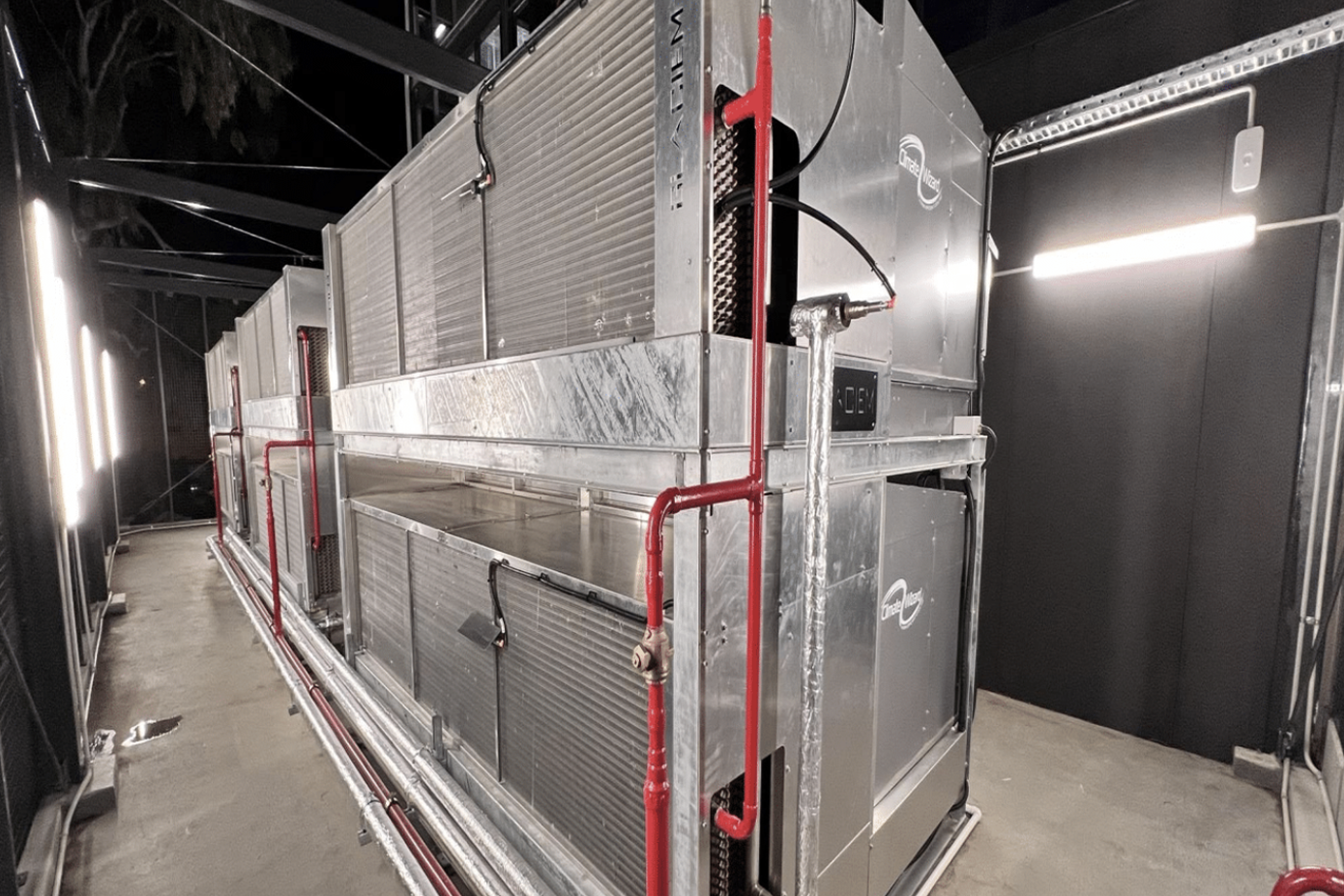
Heat Rejection – Design Conditions
Transcritical Operation
Subcritical Operation
Van Lier
Application:
Process Heating
Sector:
Horticulture
Technology:
Air cooled CO₂ condenser/gas cooler
date:
2023
Van Lier Nurseries is located in Riverhead, New Zealand and produces cut roses and plants. Its site at the Riverhead has a flower propagation house (13900 m²) and growing house (2250 m²) which are being heated up by low temperature hot water pipe heat emitters (LTHW) to maintain the space temperature between 18- 25 C.
The heating requirement of the LTHW system is provided by a natural gas boiler with nameplate capacity of 2.8 MW , while the peak heat load is around. 1.15 MW. The site also has a large stratified hot water tank of 430,000 litres capacity. This tank is used to balance the heating demand throughout the day.
Van Lier were looking for viable alternatives to natural gas boilers as part of their decarbonisation strategy.
Supported through the New Zealand Government’s GIDI program, Van Lier transitioned to a low-carbon process heat supply using Glaciem’s 1,000 kW CO₂ heat pump integrated with the site’s existing 430,000-litre stratified hot water tank. The tank is utilised as a thermal battery, charged using off-peak electricity to maximise renewable and low-cost energy. By storing thermal energy and releasing it during peak heating periods, the system increases the effective heating capacity from 1,000 kW to 1,600 kW.
This approach not only replaces the site’s natural-gas boiler but also provides a highly flexible, energy-efficient heating solution that supports demand-side management. The combined heat pump and thermal storage system enables Van Lier to significantly reduce emissions while maintaining stable temperatures across the propagation and growing houses.
our solution:
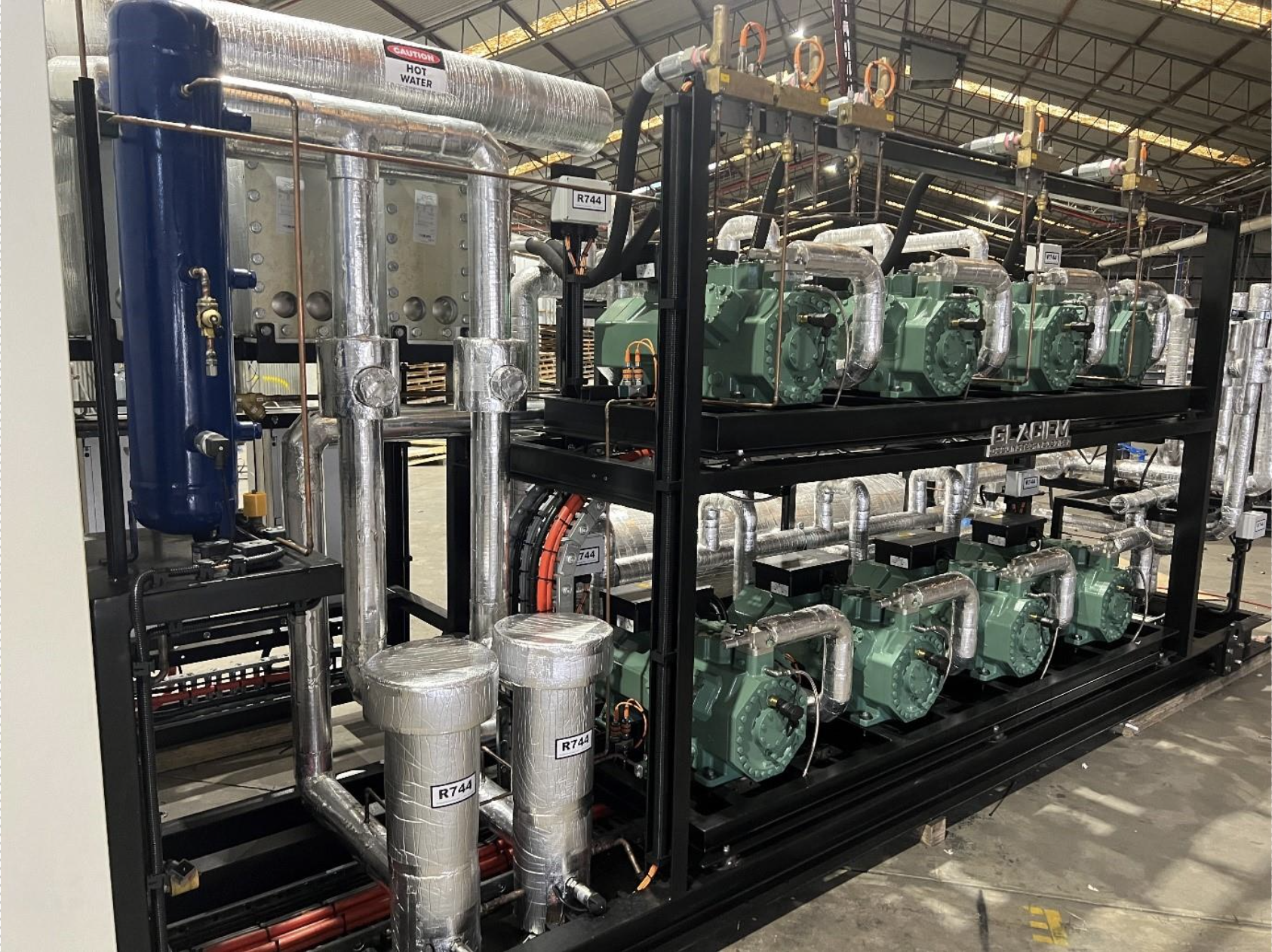
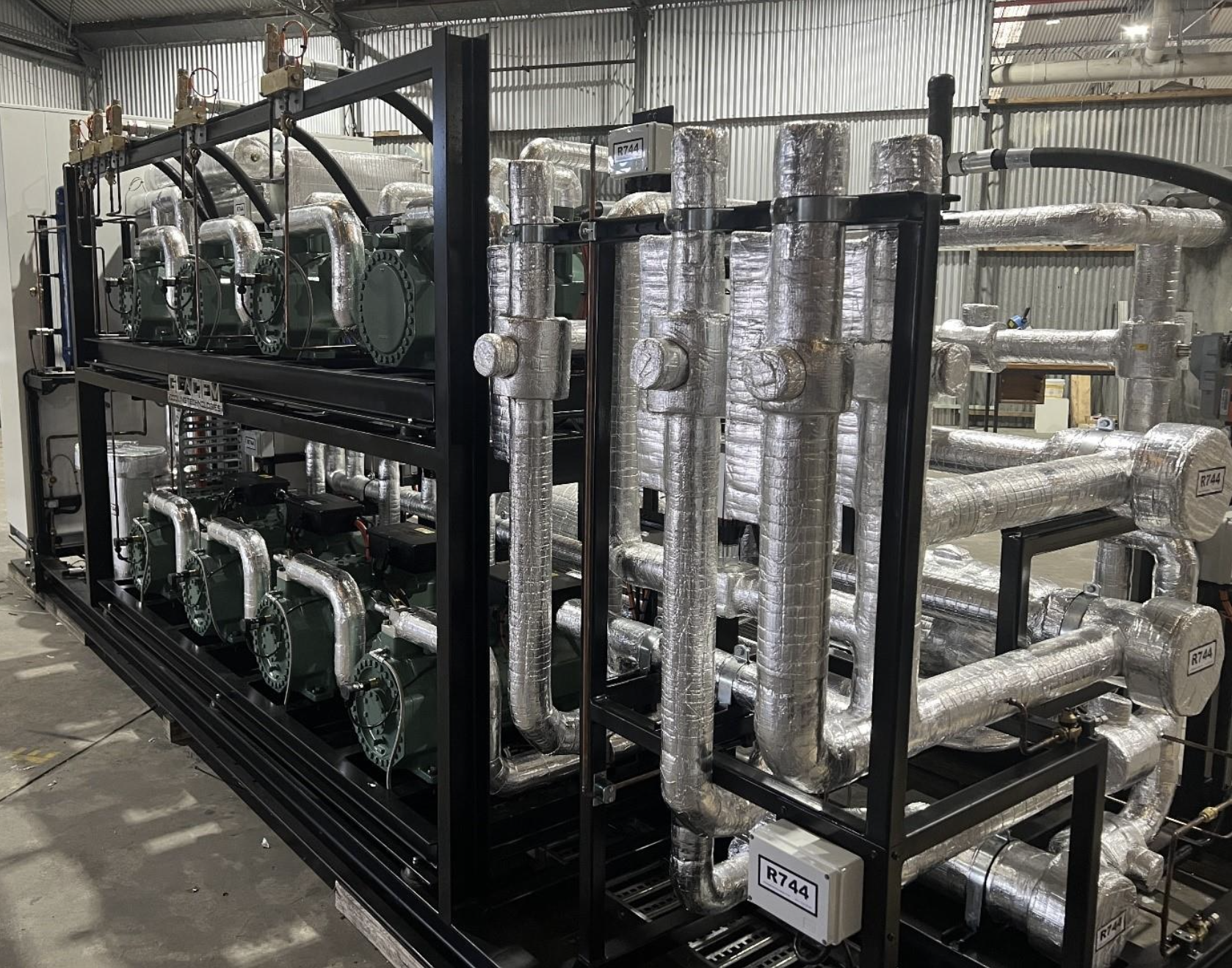
Heating Capacity 1000kW
woolworks timaru NZ
Application:
Process Heating
Sector:
Textile Industry (Wool Scouring)
Technology:
R744 (CO₂) Heat Pump
date:
2023
Woolworks is New Zealand’s only wool scouring service provider, operating the largest wool scouring facility in the world.
WoolWorks washes wool so it can be processed into the next stage. The washing process is very similar to an automatic washing machine but on a much larger scale. The wool goes through three bowls of heated water at different temperatures. The scour lines are up to 100 meters long and 5 meters wide and contain 27 cubic meters of water, so there are significant energy costs to heat the water and run the machines. The existing system used a coal fired boiler to generate steam & hot water.
The GIDI funding enabled the installation of an electrode boiler for steam production and an industrial heat pump for hotwater generation. The new Glaciem R744 heat pump, which uses wastewater as a cooling source, is now fully functioning and capable of heating water from 15°C to 90°C.
The completed project is delivering significant environmental benefits, expected to reduce more than 11,000 tonnes of carbon dioxide emissions each year—the equivalent of removing 3,021 cars from the road.
The company has been working with EECA since 2016 to reduce its energy usage. As part of that journey, its most recent project has successfully replaced coal with electricity to power the Timaru site—an initiative that is now fully completed and operating as a world-leading example of industrial decarbonisation.
EECA invested $3.63 million through the Government Investment in Decarbonising Industry (GIDI) fund to cofund the switch from coal to electricity at the Washdyke site near Timaru.
our solution:
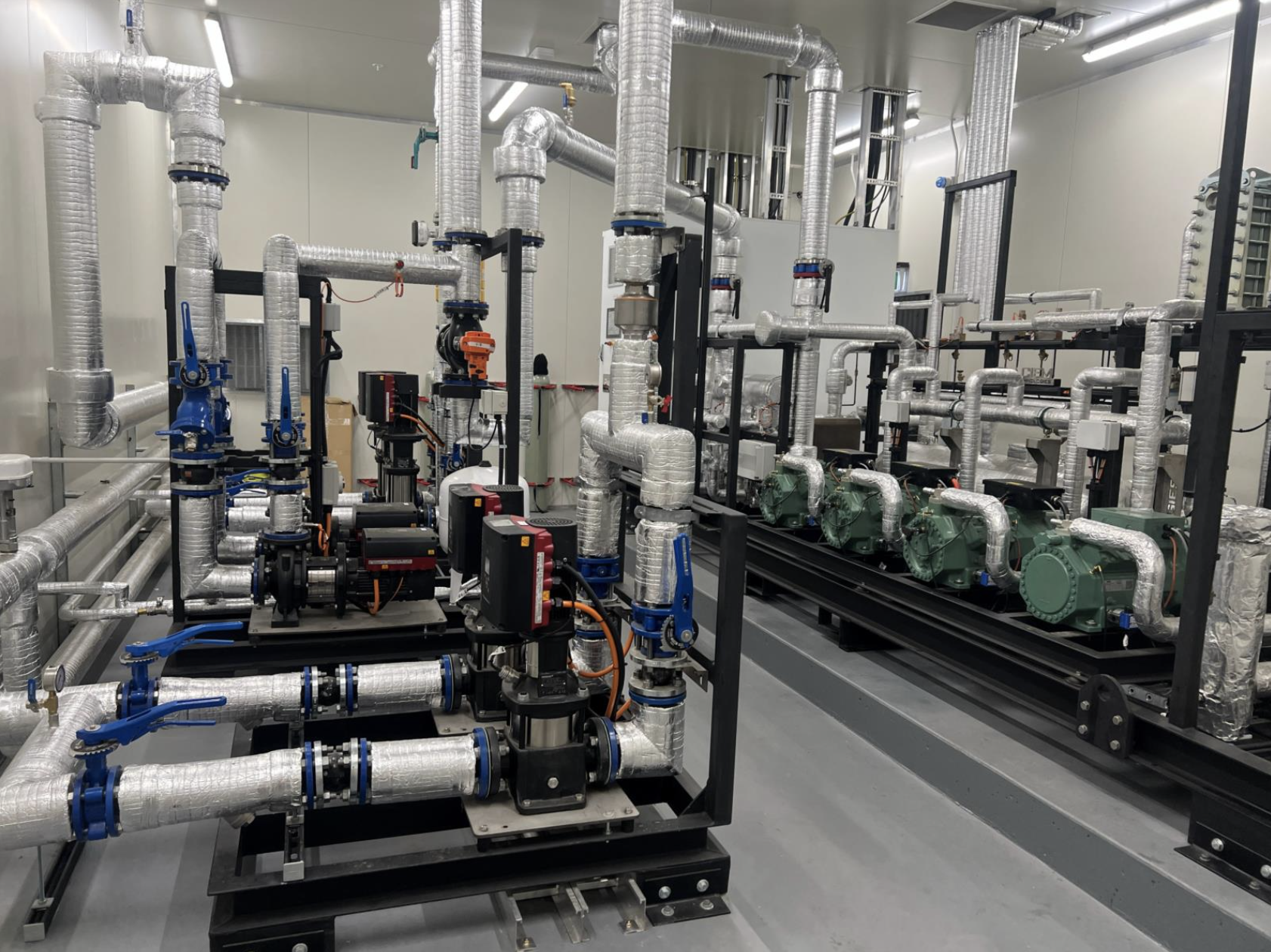
Heating Capacity 712 kW
woolworths whyalla, SA
Application:
Commercial Building Heating & Cooling
Sector:
HVAC
Technology:
R744 (CO₂) Heat Pump
date:
2022
The building’s ageing HVAC equipment (>20 years old) operated on the ozonedepleting HCFC refrigerant R22. Under the Montreal Protocol, R22 has been fully phased out, with no virgin imports into Australia since 2016. As a result, the cost of reclaimed R22 has risen to more than $400/kg, making ongoing maintenance increasingly uneconomical.
When replacing endoflife R22 equipment, building owners now face a complex refrigerant landscape. Many of the common retrofit options use HFC, HFO, or lowGWP HFC/HFO blends. While these refrigerants offer lower global warming potential than legacy HFCs, they introduce new challenges, including A2L flammability classifications, additional safety system requirements, and emerging environmental concerns such as TFA (trifluoroacetic acid) formation and longterm persistence in the environment.
Most HFOs and many lowGWP blends are also classified as PFAS (per and polyfluoroalkyl substances). These chemicals are currently under regulatory review worldwide and are facing progressive restrictions and proposed bans in Europe, creating uncertainty around their longterm viability as refrigerants.
These factors leave asset owners seeking a safe, compliant, and futureproof alternative to ageing R22 systems.
Cooling is provided by Direct Expansion (DX) of liquid CO₂ in the air handling unit evaporator.
Heating is achieved by desuperheating supercritical CO₂ in the heating coil installed in the air handling, heat not extracted from the supercritical CO₂ in the heating coil can be further cooled by the adiabatic gas cooler. The gas cooler also has two additional airside evaporator coils installed that can provide additional cooling load during heating if there is insufficient cooling load from the air handling unit cooling coil
our solution:
Building on the lessons learnt from the Oatmill project Glaciem has designed a unique new system capable of simultaneous heating & cooling with extremely high efficiencies.
The CO₂ heat pump is designed to provide cooling or heating to the store via an air handling unit, the heat pump can also provide simultaneous cooling and heating for dehumidification, with capacity for full air sourced heating when no simultaneous cooling available and adiabatic gas cooler when no (or insufficient) heating demand available.
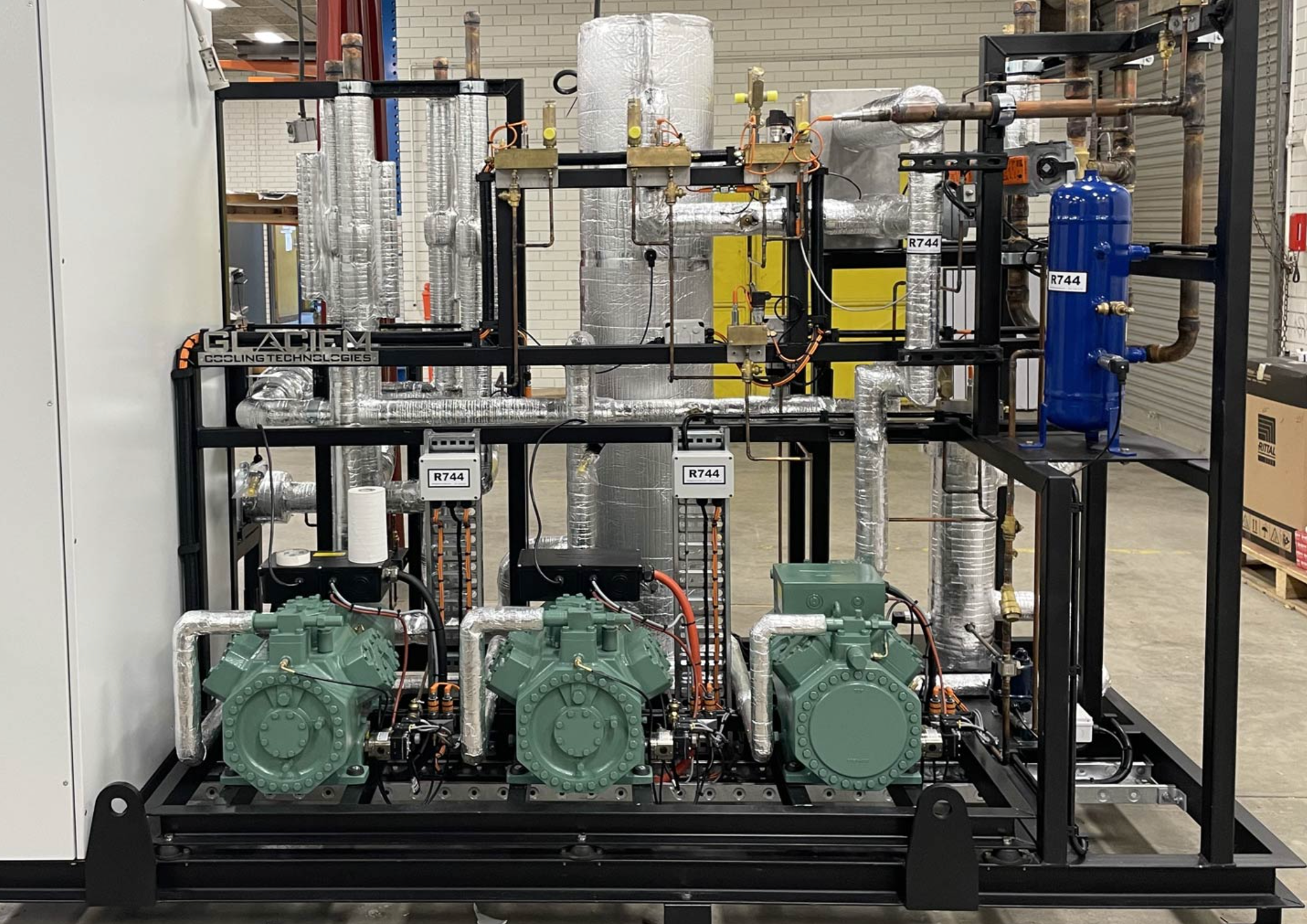
Capacity Overview
woolworths gordon
Application:
Commercial Building Heating & Cooling
Sector:
HVAC
Technology:
R744 (CO₂) Heat Pump
date:
2022
The building’s ageing HVAC equipment (>20 years old) operated on the ozonedepleting HCFC refrigerant R22. Under the Montreal Protocol, R22 has been fully phased out, with no virgin imports into Australia since 2016. As a result, the cost of reclaimed R22 has risen to more than $400/kg, making ongoing maintenance increasingly uneconomical.
When replacing endoflife R22 equipment, building owners now face a complex refrigerant landscape. Many of the common retrofit options use HFC, HFO, or lowGWP HFC/HFO blends. While these refrigerants offer lower global warming potential than legacy HFCs, they introduce new challenges, including A2L flammability classifications, additional safety system requirements, and emerging environmental concerns such as TFA (trifluoroacetic acid) formation and longterm persistence in the environment.
Most HFOs and many lowGWP blends are also classified as PFAS (per and polyfluoroalkyl substances). These chemicals are currently under regulatory review worldwide and are facing progressive restrictions and proposed bans in Europe, creating uncertainty around their longterm viability as refrigerants.
These factors leave asset owners seeking a safe, compliant, and futureproof alternative to ageing R22 systems.
Glaciem delivered a fully electric CO₂ HVAC upgrade for the Woolworths Gordon store, replacing ageing R22-based equipment with a future-proof natural refrigerant platform. Unlike traditional supermarket HVAC systems that rely on chilled water loops, hot-water boilers or synthetic refrigerants, the patented Glaciem design provides direct-expansion CO₂ cooling, high-efficiency transcritical heating, and simultaneous cooling/heating for dehumidification — all through the existing air-handling infrastructure.
The system integrates a CO₂ desuperheater coil within the AHU for direct heating, while the cooling coil operates as a DX evaporator, enabling lower leaving-air temperatures and reduced fan energy. Additional ambient evaporator coils within the gas cooler assembly provide supplementary cooling capacity during high heating loads, ensuring stable performance across all operating conditions. This multi-mode capability allows the store to maintain precise temperature and humidity control without the complexity of 4-pipe heat pumps or secondary water systems.
our solution:
The project was delivered in collaboration with Woolworths, Protech Air Conditioning & Electrical Solutions, and Beaton’s HVAC & Refrigeration, with Glaciem providing system design, equipment supply and commissioning support. The installation demonstrated outstanding performance, achieving cooling COPs above 5 and heating COPs above 6, validating CO₂ as a high-efficiency alternative for commercial HVAC.
This innovative approach to supermarket HVAC was recognised nationally, with the Woolworths Gordon project receiving the AIRAH Award for Best HVAC Retrofit or Upgrade in 2023, highlighting its leadership in sustainability, natural refrigerants and next-generation HVAC design.
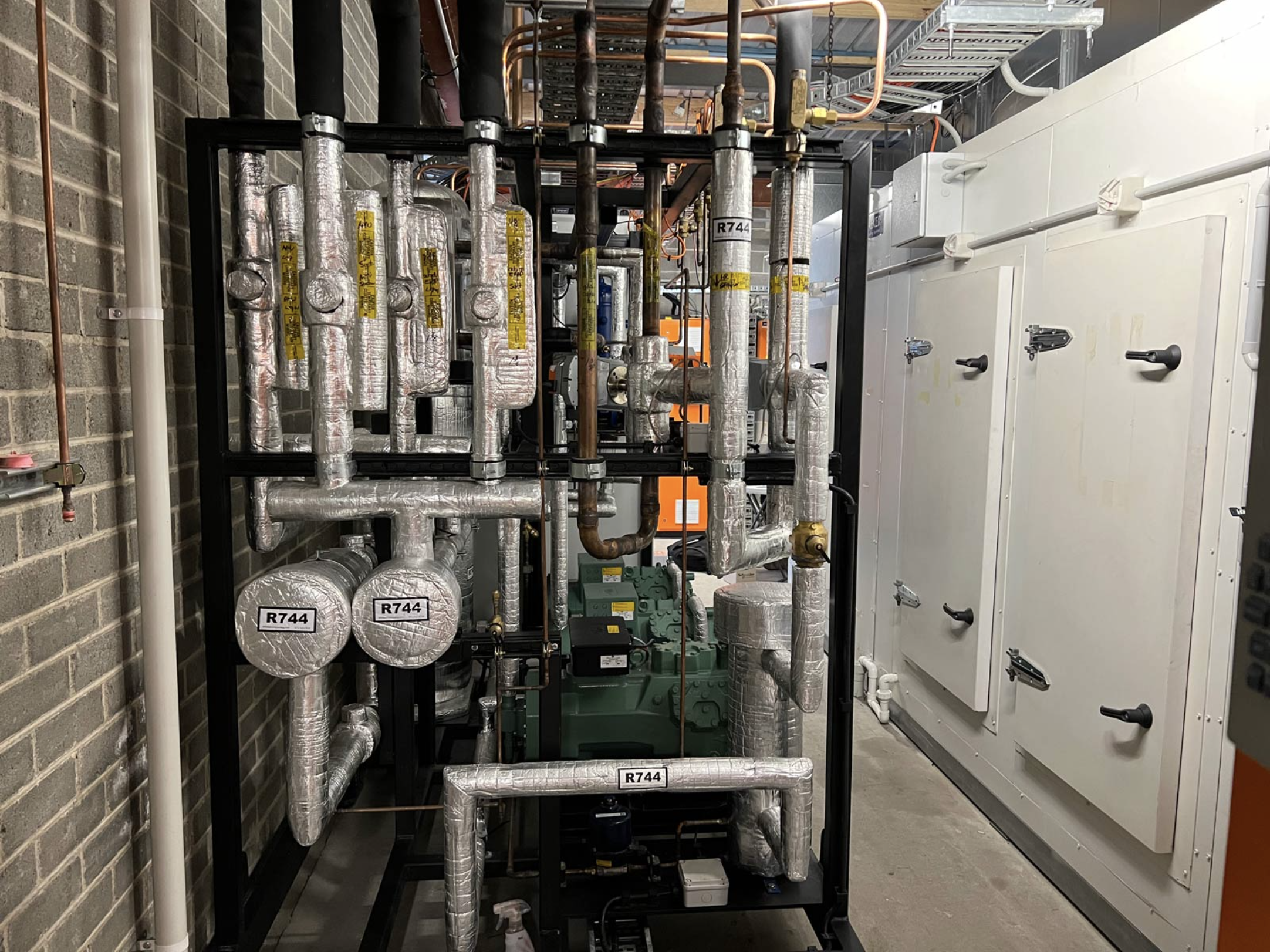
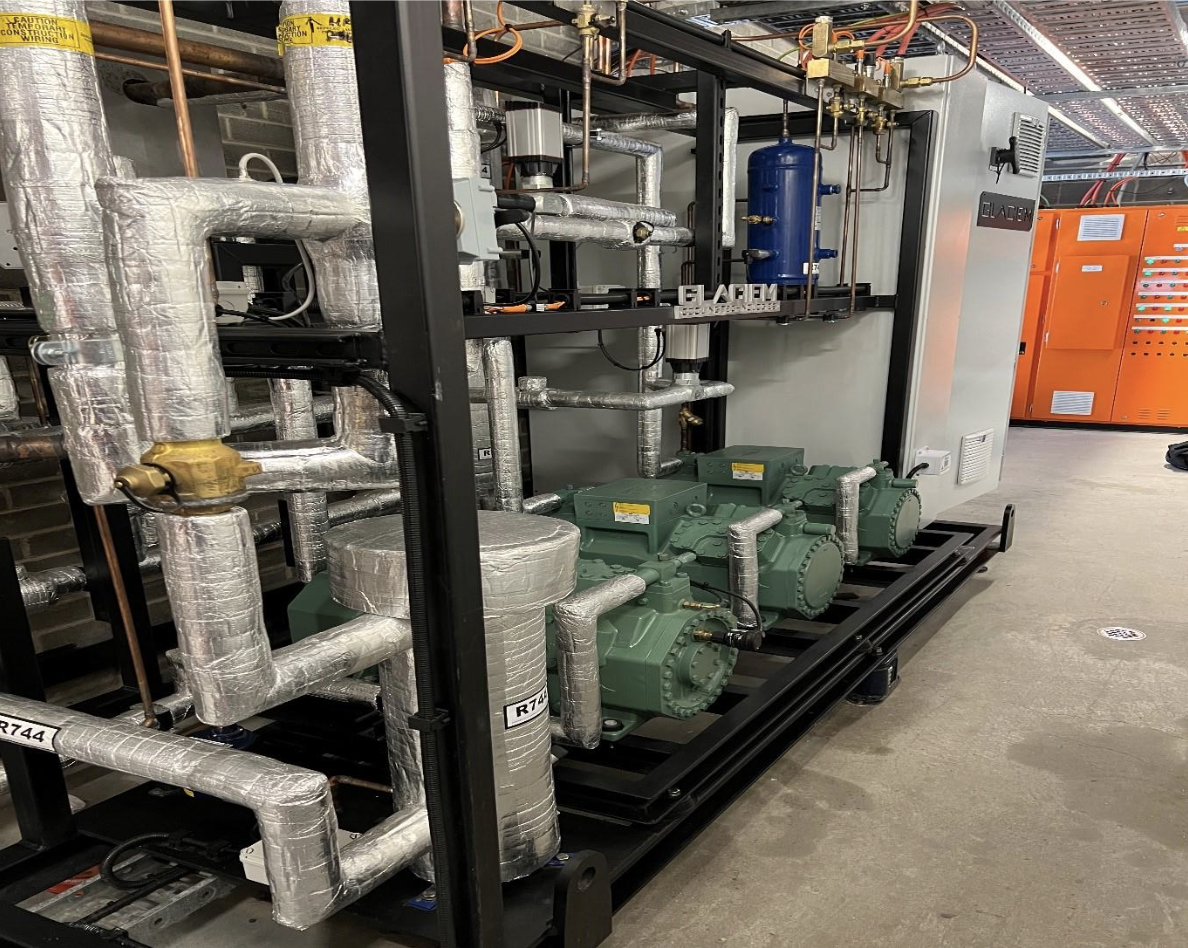

Capacity Overview
Ojj Singapore
Application:
Food Processing / Food Storage
Sector:
Cold Chain
Technology:
R744 (CO₂) Booster C/W Parallel Compressors
date:
2022
OJJ Foods is one of the largest processors and distributors of chilled and frozen pork in Singapore. It supplies pork in bulk and consumer-friendly packs to major supermarkets under their house brands, established brand name restaurant chains as well as hawkers & wet market stalls
OJJ Foods new is a six-storey, 18,000sqm food processing facility located in Jurong East Singapore
The new facility comprises a fully automated refrigerated ASRS warehouse, chiller and freezer cold rooms, central kitchen and other production and ancillary offices.
A project of this size would normally be a two stage ammonia system, however concerns were raised around the safety of ammonia. HFC & HFO refrigerants were not deemed a sustainable solution.
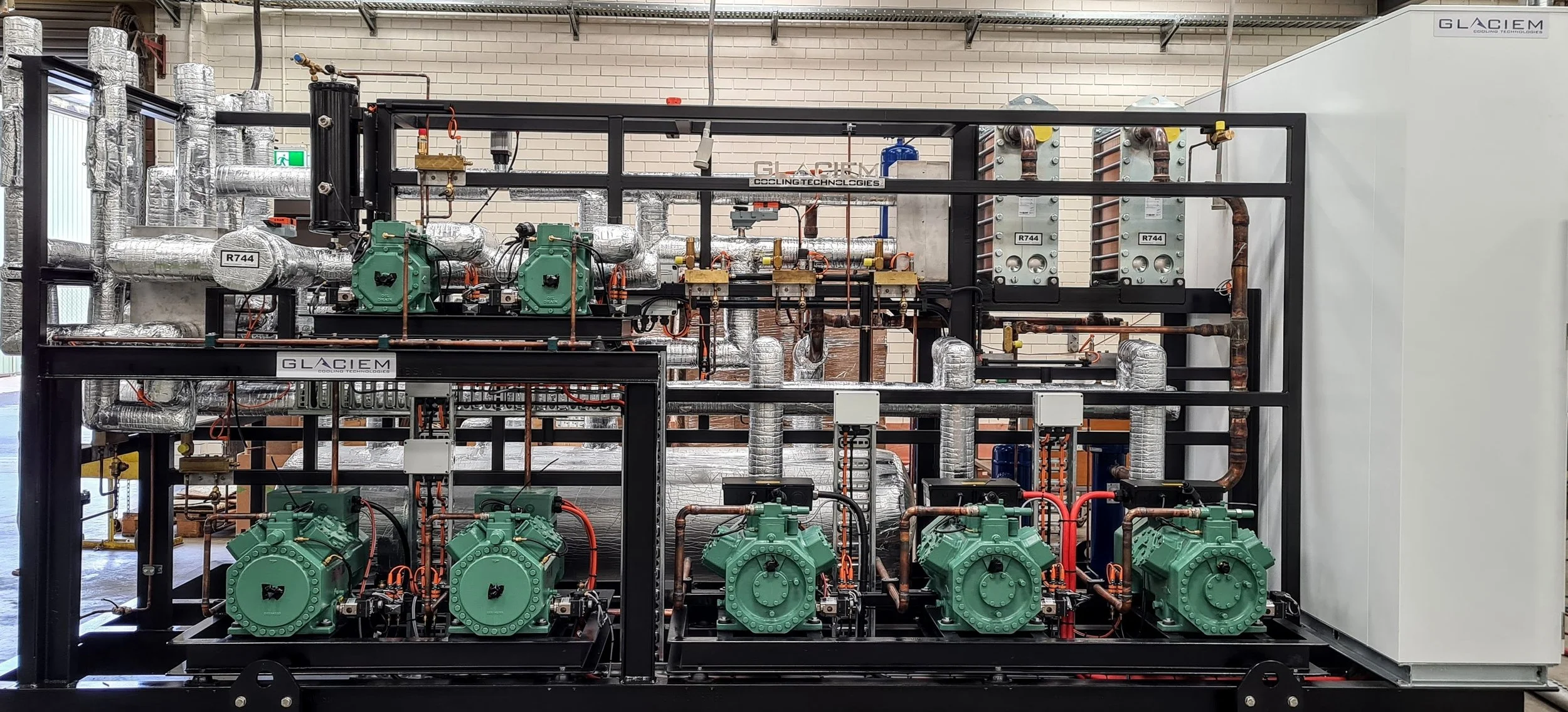
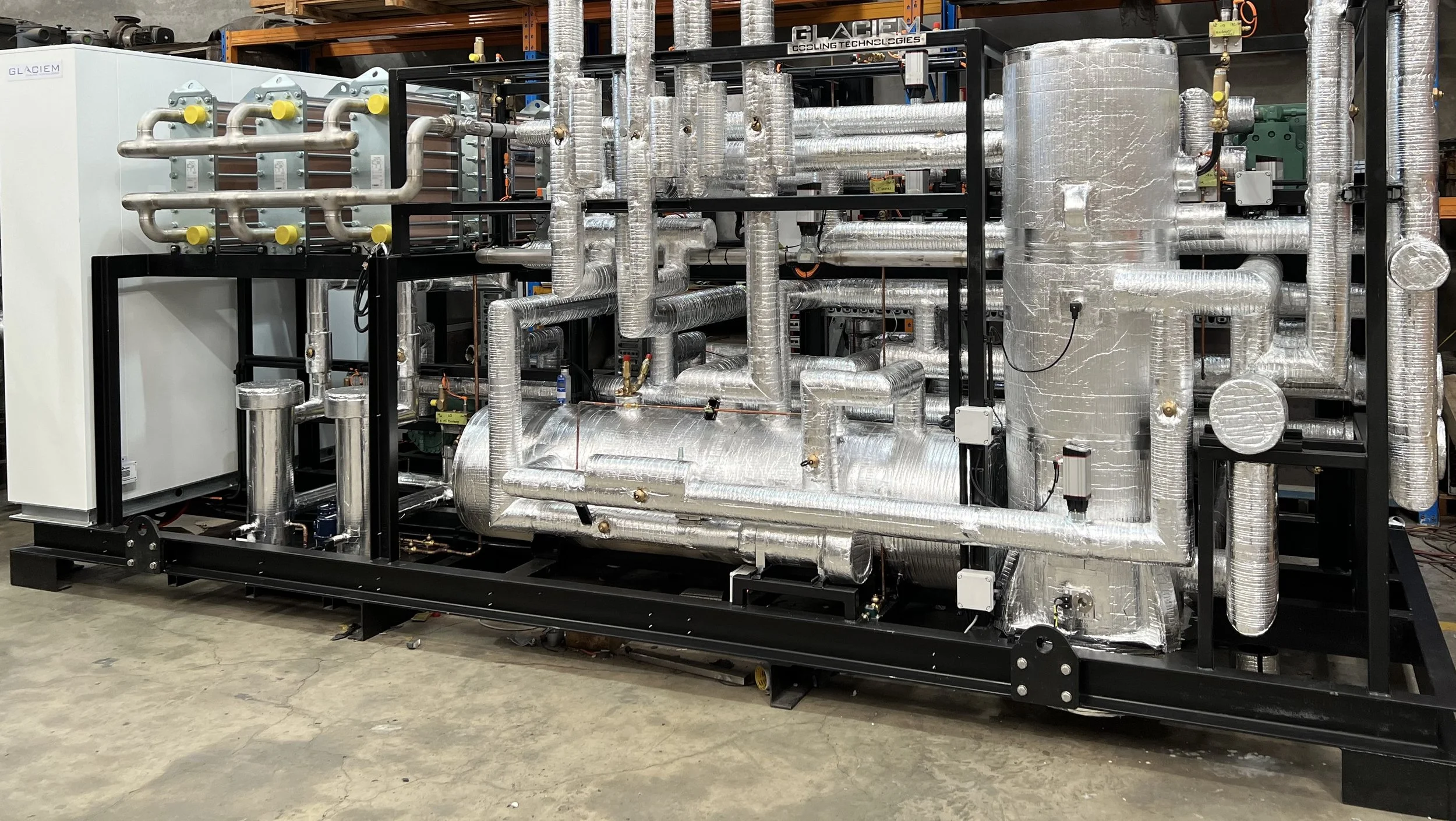
Working in partnership with the Far East Group (FEG) Glaciem’s solution comprises of five independent R744 booster systems delivering >2000kW of refrigeration with temperature ranges from -42°C to 10°C.
our solution:
Levels 1–3
Level 1 – 2 Stage Booster (Parallel Comps)
Level 3 – 2 Stage Booster (Parallel Comps)
Level 4 – 2 Stage Booster (Parallel Comps)
Levels 4–6
Level 5 – 2 Stage Booster (Parallel Comps)
Level 6 – 2 Stage Booster (Parallel Comps)
WF montague
Application:
Heat Pump with Energy Storage
Sector:
Process Heating & Cooling/Cold Storage
CO₂ R744 Heat Pump
Phase Change Material Thermal Energy Storage (PCM TES)
Advanced Control Forecasting Algorithm (ACFA)
Technology:
date:
2020/21
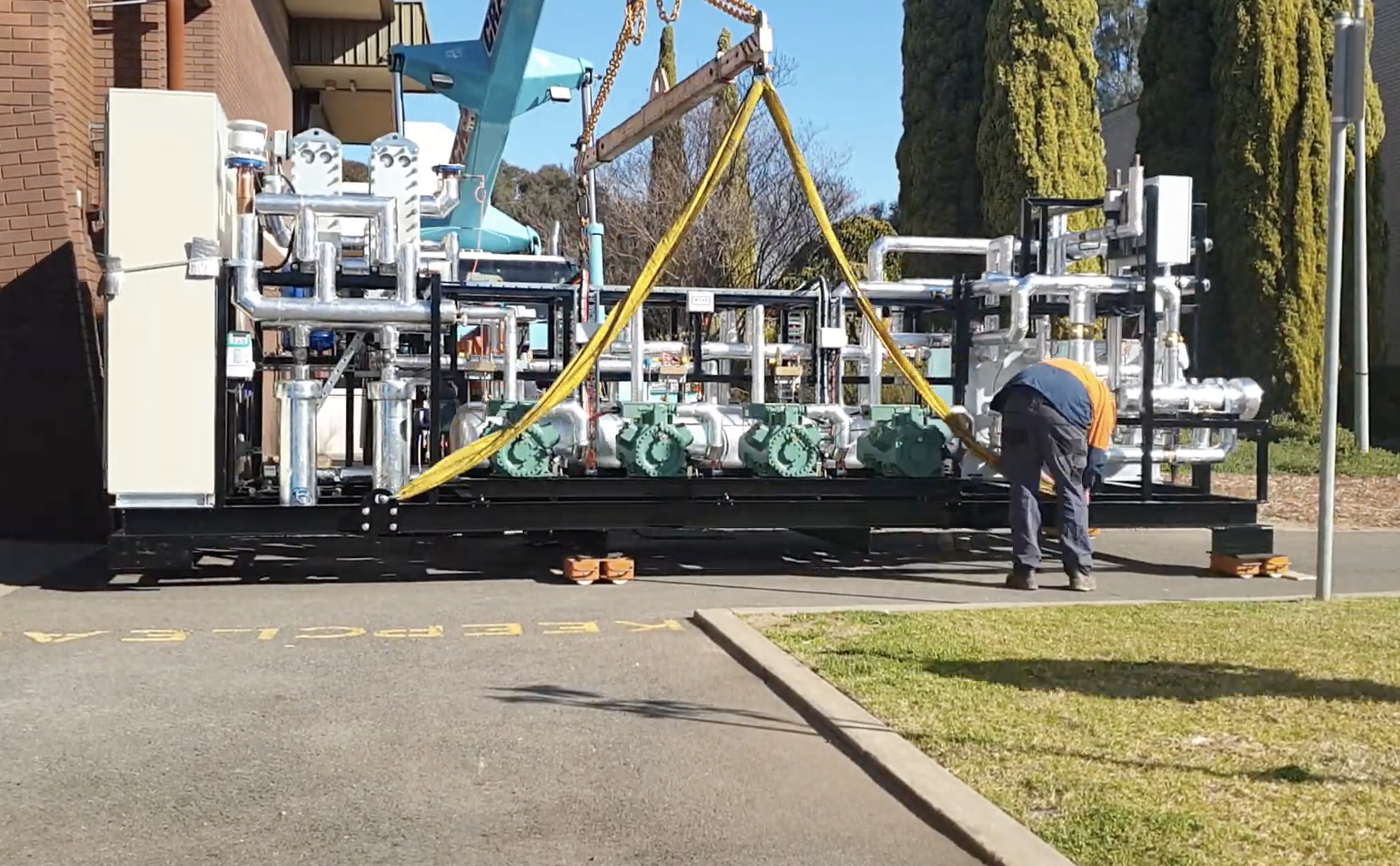
The completed project includes the installation of Glaciem’s R744 heat pump capable of delivering 714 kW of cooling and 1.1 MW of heating, supplying water from 35°C to 83°C.
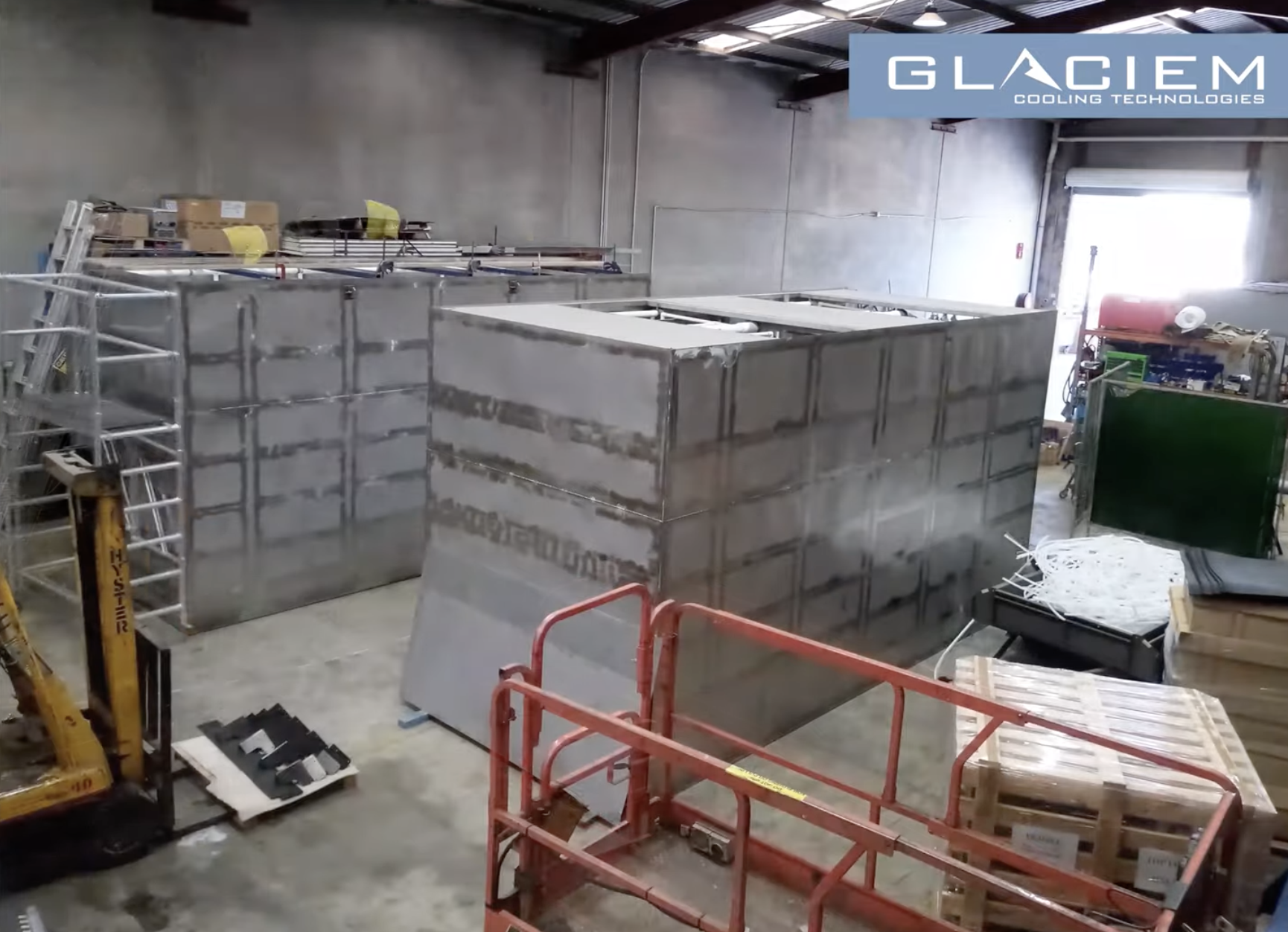
Glaciem’s Two TES DYN 900, PCM thermal energy storage units have also been installed, providing 4 MWh of thermal energy storage at -6°C. The heat pump and PCM thermal storage system are fully integrated with the site’s new ammonia–glycol refrigeration plant and connected to the onsite solar PV system. Using –6°C PCM and propylene glycol as the heat transfer fluid, the system maximises efficiency and renewable energy utilisation.
In addition, an Advance control and forecasting algorithm ( ACFA ) has been integrated with the site’s SCADA platform, allowing dynamic control of heating and cooling loads to optimise both energy usage and thermal storage from the facility’s renewable energy generation.
Glaciem’s CO₂ heat pump was the largest CO₂ only heat pump in Southern Hemisphere at the time of install and negates the need to use LPG for heating water.
This project received funding from ARENA as part of ARENA’s Advancing Renewables Program.
Montague, one of Australia’s largest fruit growers, has completed its expansive new multiuse fruit processing facility in Narre Warren North. Now fully operational, the site processes over 260 million pieces of fruit each year for distribution across Australia and international markets.
Because the facility does not have access to natural gas, Montague partnered with refrigeration design engineers, production equipment suppliers, and Glaciem to create an efficient, integrate refrigeration and heating system. This solution works alongside the ammonia refrigeration plant to meet the site’s high temperature and hot water demands.
our solution:
View virtual tour here
View build timelapse here
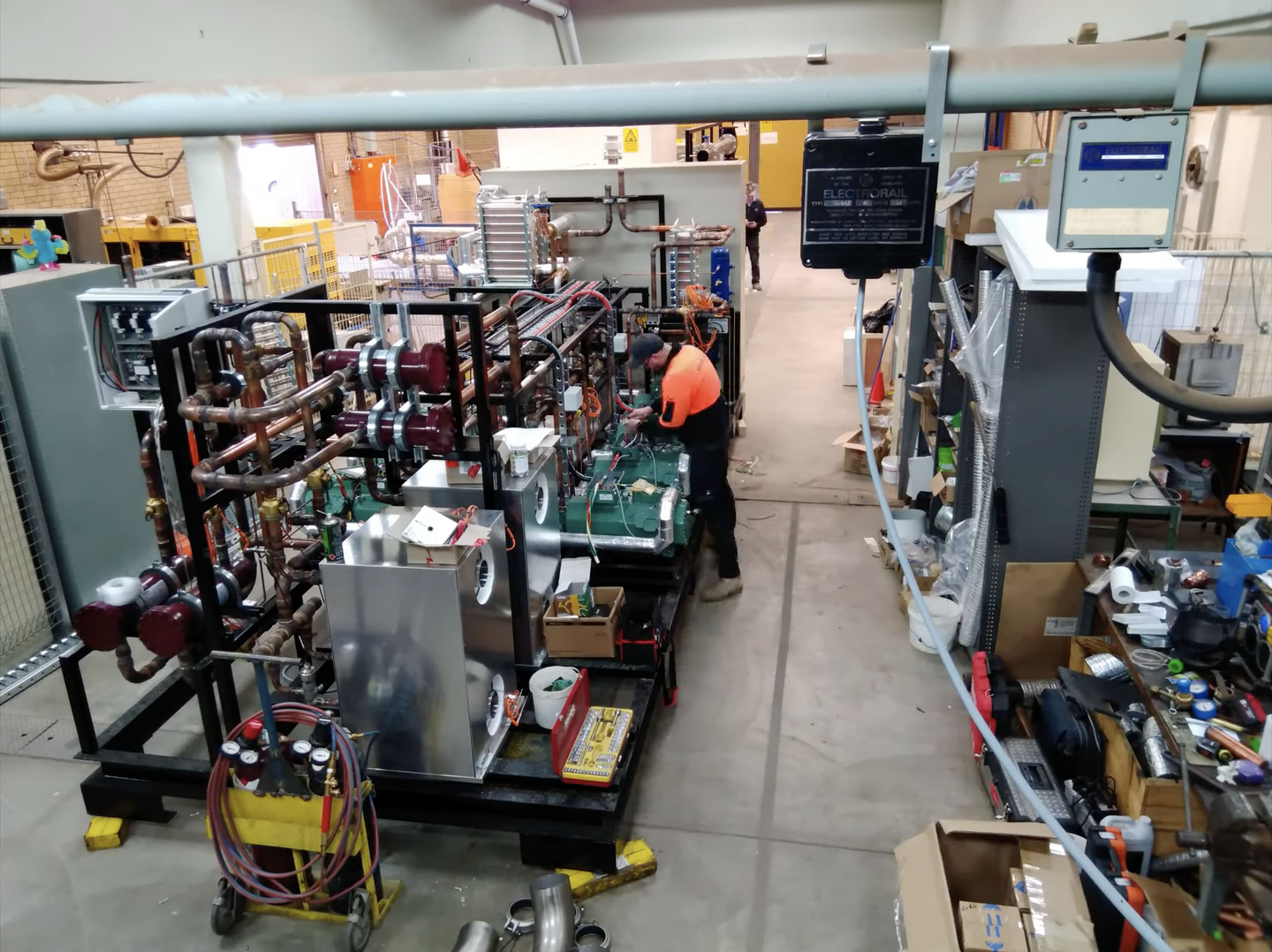
View loading timelapse here
View TES construction timelapse here
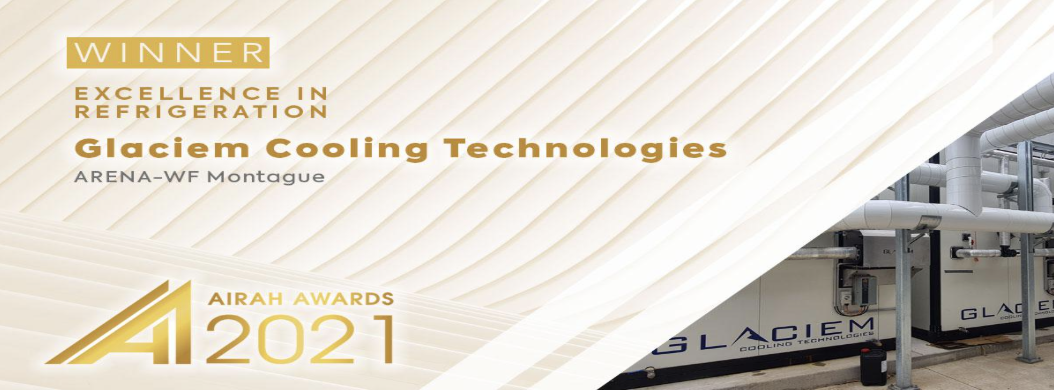
The WF Montague project was recognised nationally, receiving the AIRAH 2021 Excellence in Refrigeration Award for its innovative integration of CO₂ heat pump technology, PCM thermal energy storage, and seamless coupling with the site’s ammonia–glycol refrigeration system.
R744 Heat Pump
714kW Cooling 1.1MW heating
PCM/TES
Oatmill Cinema
Application:
Commercial Building Heating & Cooling
Sector:
HVAC
Technology:
CO₂ Only Cooling and Heating
date:
2020
Oatmill Cinema is a long-established entertainment venue operating within a heritage building in Mount Gambier. The site’s original HVAC equipment, more than 20 years old, relied on the ozone-depleting HCFC refrigerant R22. With R22 fully phased out under the Montreal Protocol and no virgin imports into Australia since 2016, the cost of reclaimed refrigerant has risen sharply, making continued operation increasingly impractical.
For the cinema’s owners, replacing the ageing plant presented a difficult decision. Many of the common retrofit options on the market use HFC, HFO or low-GWP blends, but these refrigerants introduce new challenges — including high global-warming potential, A2L flammability classifications, and emerging environmental concerns such as PFAS and TFA formation.
These factors made it essential to identify a long-term, sustainable alternative that would not compromise safety, compliance or future regulatory requirements.
To support this decision, Oatmill Cinema engaged Glaciem Cooling Technologies to undertake a detailed assessment of the building’s heating, cooling and dehumidification demands. Glaciem completed a full techno-economic analysis and system-performance modelling to determine the most efficient and future-proof HVAC solution for the heritage site.
Glaciem designed and delivered the world’s first direct-expansion, CO₂-only HVAC system capable of providing simultaneous heating and cooling — a breakthrough application of natural-refrigerant technology in a heritage building.
A key advantage of the design was its ability to integrate seamlessly with the cinema’s existing HVAC infrastructure. Only the heating and cooling coils required replacement, allowing the original air-handling units, ductwork and mechanical layout to remain in place. This approach preserved the building’s heritage constraints and delivered a cost saving of more than 45% compared with a full system replacement.
The new CO₂ system provides high-efficiency cooling, heating and dehumidification, and is estimated to reduce the cinema’s HVAC electrical operating costs by approximately 56%. The installation demonstrates how natural-refrigerant technology can be applied in older buildings with minimal disruption while delivering substantial energy and emissions benefits
our solution:
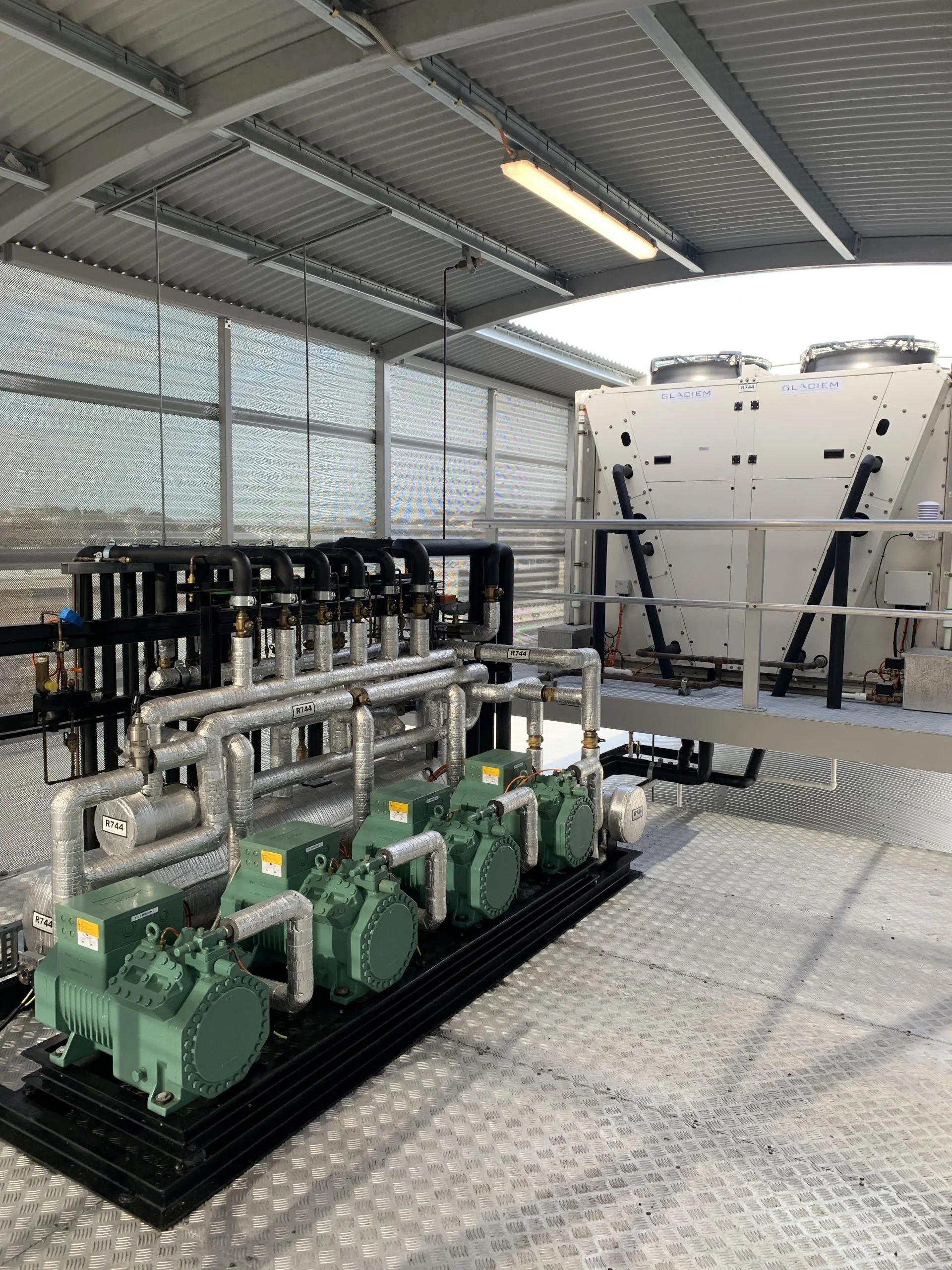
210kW Cooling
106kW Heating
Pernod ricard winemakers
Application:
Barrel Storage, Packing Areas
Sector:
Process Cooling
Phase Change Material Thermal Energy Storage (PCM TES)
Advanced Control & Forecasting Algorithm (ACFA)
Technology:
date:
2019/20
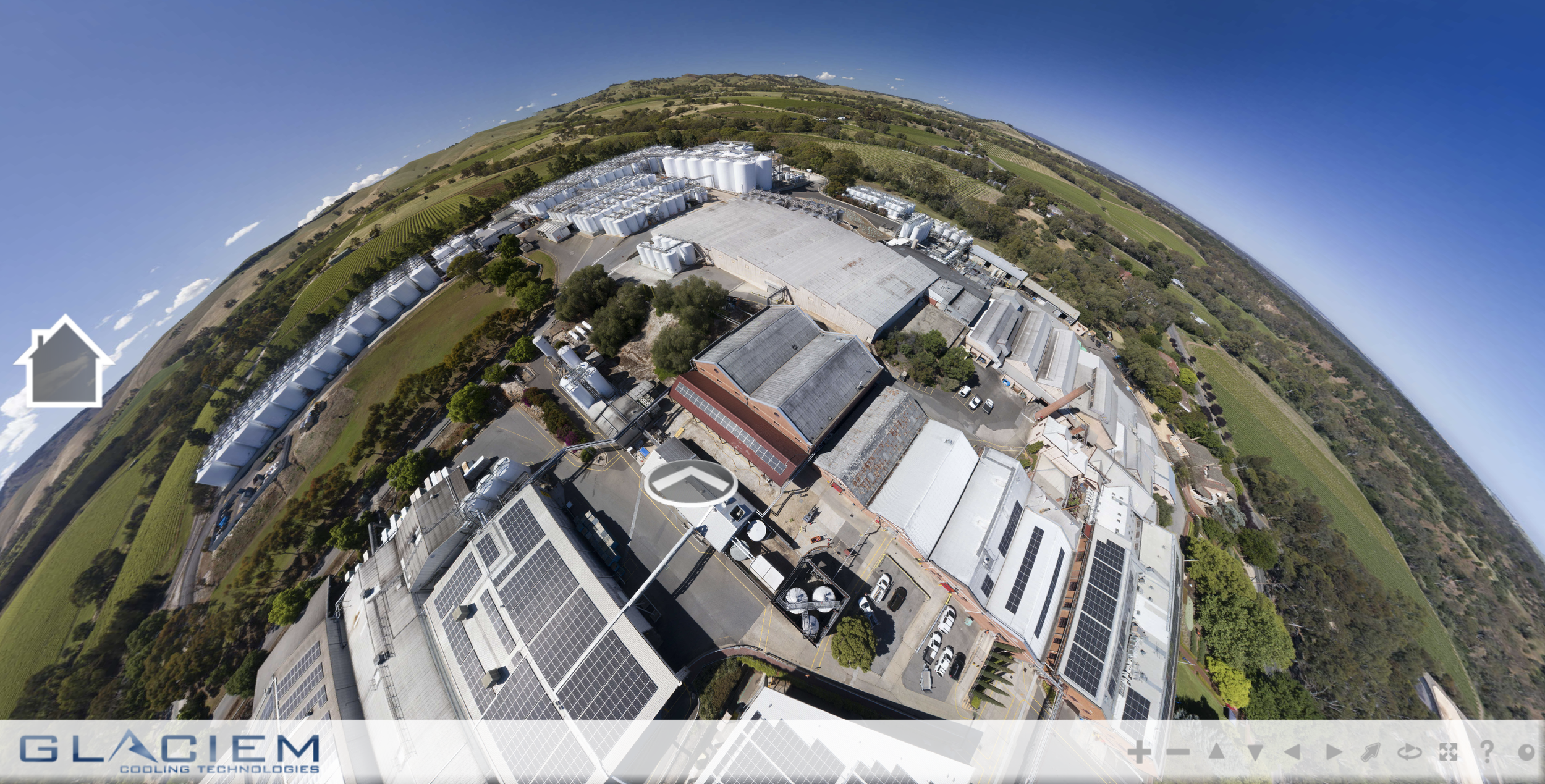
Pernod Ricard’s Roland Flat facility is located in the Barossa Valley, SA, and has winemaking, wine storage and packaging capability. Significant refrigeration is used to process the harvest during summer months from January to April. Refrigeration loads decrease by about 70% outside of this period. The existing refrigeration plant, Frig 9, operates year round, providing process cooling, barrel storage and air conditioning and has been identified as optimal for thermal storage integration.
This project involves the integration of a Glaciem thermal storage unit operating on renewable energy with the existing Frig 9 ammonia refrigeration plant to optimise process cooling techniques in a primary production context and reduce exposure to peak electricity costs.
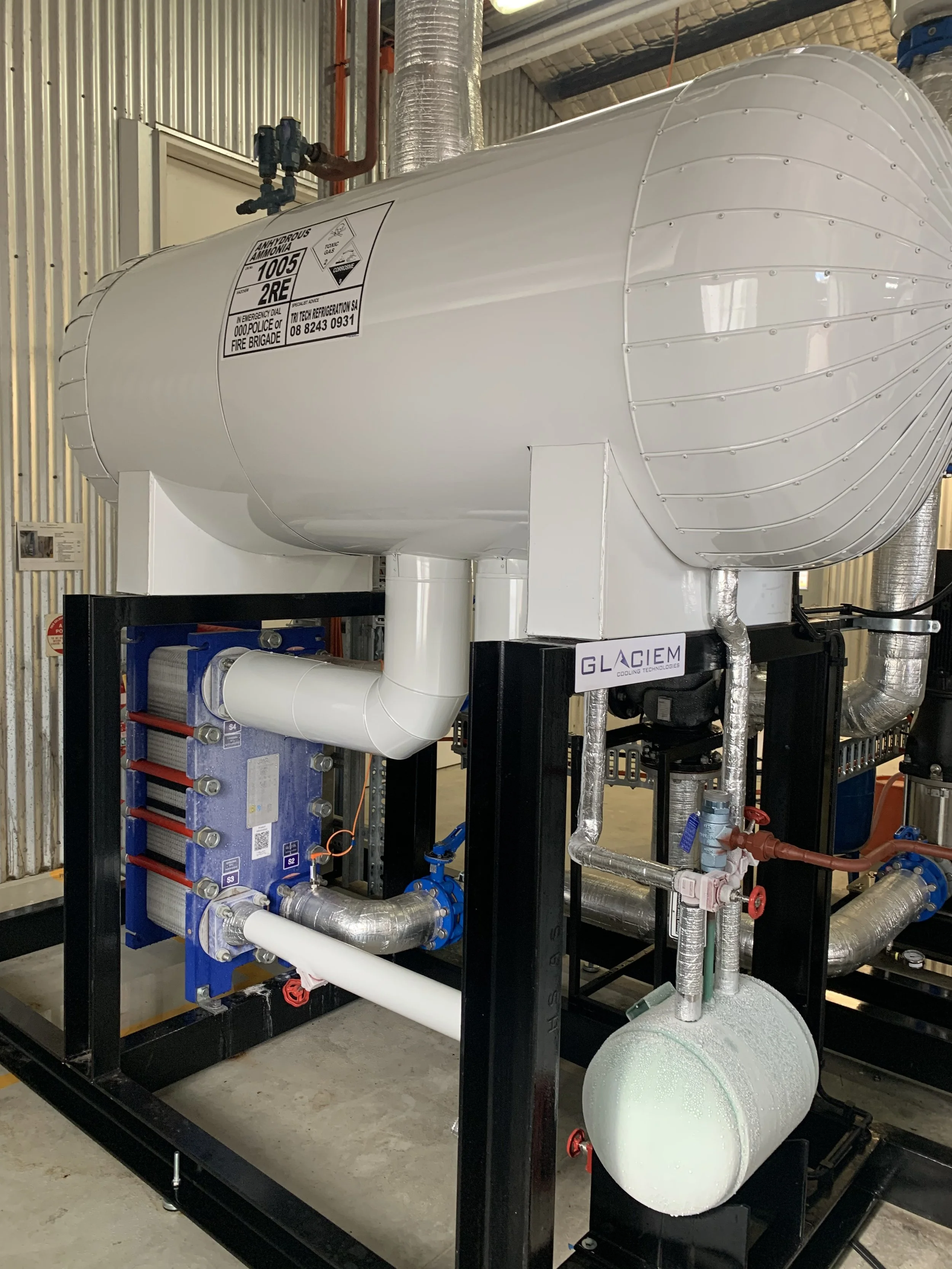
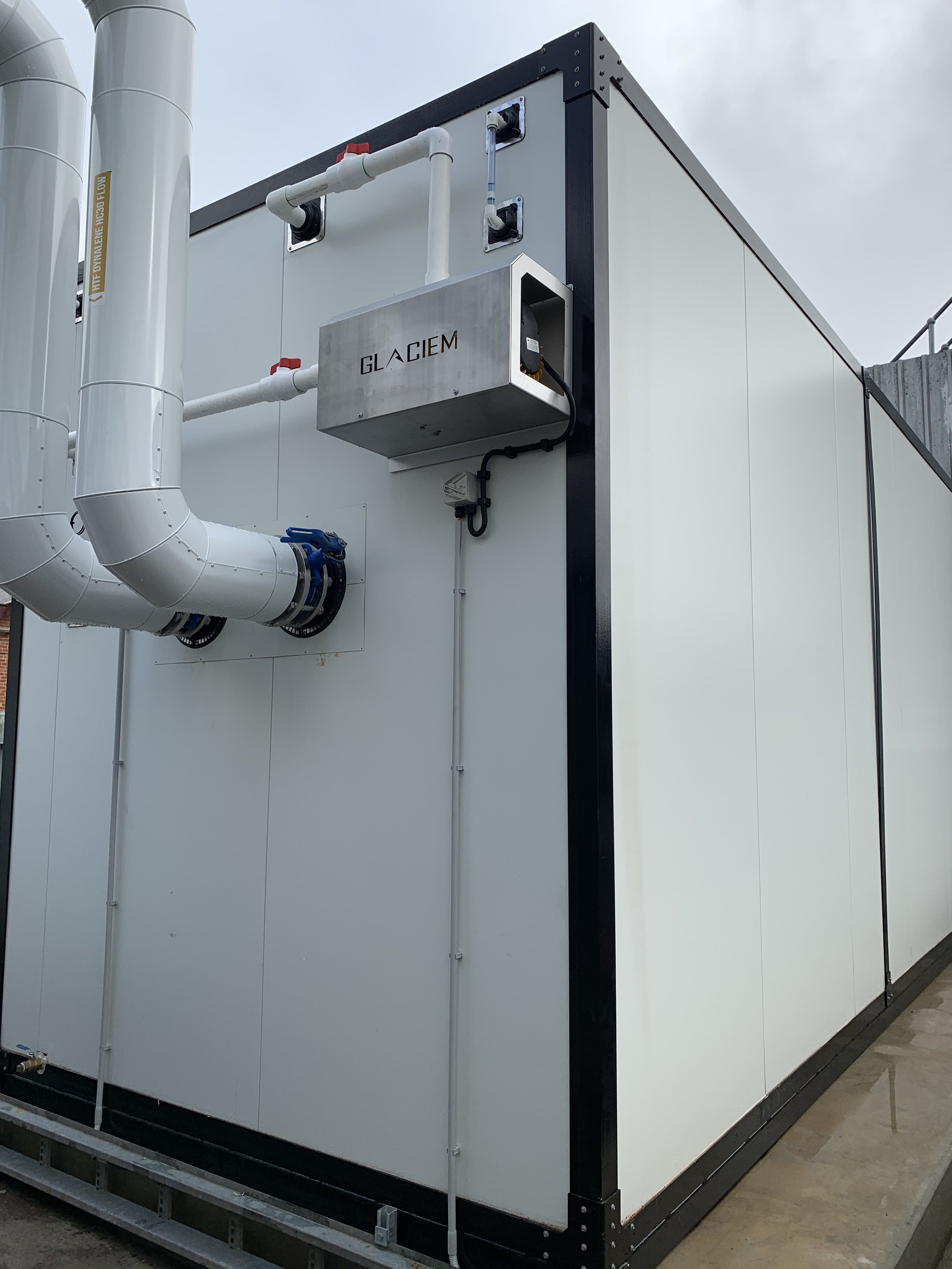
The completed project includes the installation of a new Thermcold DYN 900 unit, delivering 2.6 MWh of thermal energy storage to support the site’s operational demands. The PCM thermal energy storage system is fully integrated with the facility’s existing ammonia refrigeration pant and connected to both onsite and virtual renewable energy assets to maximise flexibility and energy efficiency.
Operating with 0°C PCM and Dynalene HC as the heat transfer fluid, the system maintains high thermal performance while supporting renewable energy utilisation.
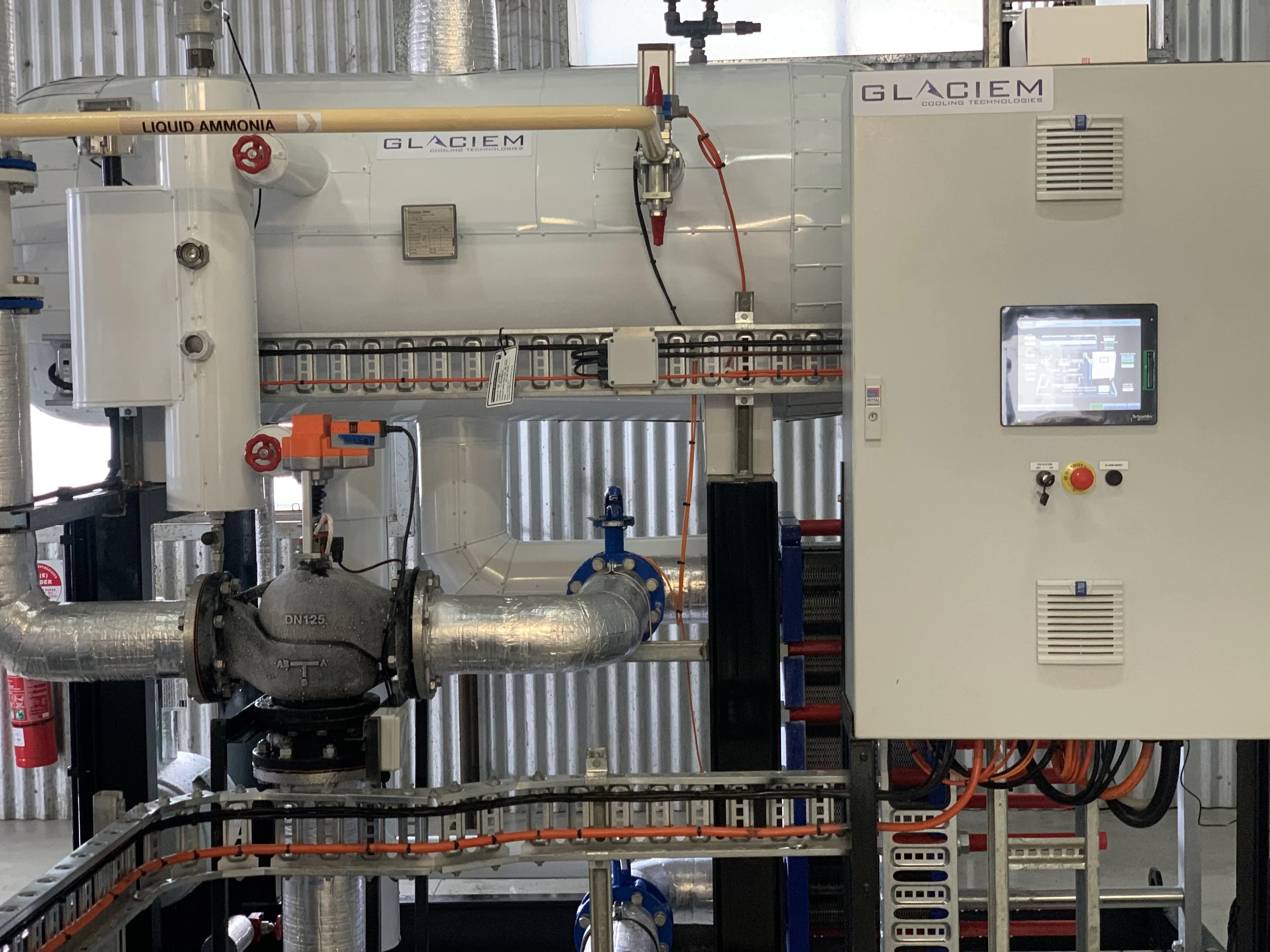
Additionally, ACFA has been integrated with the site’s Building Management System (BMS), enabling dynamic control over energy use and storage to optimise the contribution of renewable energy sources across the facility.
our solution:
View virtual tour here
Thermcold DYN 420 PCM Energy Storage 1MWh
reef hq, townsville
Application:
HVAC
Sector:
Commercial Buildings
CO₂ Heat Pump
Phase Change Material Thermal Energy Storage (PCM TES)
Advanced Control & Forecasting Algorithm (ACFA)
Technology:
date:
2019/20
Reef HQ operates a large public aquarium in a tropical climate, with significant energy demand driven by its chilled-water air-conditioning system and the need to maintain more than four million litres of seawater at 28°C for marine life. The existing HFC-based chilled-water plant provided cooling only, with no heat-recovery capability, limiting operational flexibility and increasing electrical consumption.
Despite being located in the tropics, winter ambient temperatures in Townsville can fall to 12°C, well below the required 28°C seawater temperature. As a result, the existing plant was unable to meet the aquarium’s heating load during colder months, forcing Reef HQ to hire a temporary rental heat pump every winter to maintain stable tank conditions.
The site also has 256 kW of installed solar PV but is constrained by a strict zero-export limit. This resulted in substantial PV curtailment during the middle of the day, when generation exceeded on-site load. Consequently, the facility often relied on expensive peak-period electricity in the late afternoon and evening, despite having unused renewable energy available earlier in the day.
These issues — high operating costs, under-utilised renewable-energy assets, seasonal heating shortfalls, and a lack of system resilience — highlighted the need for a more efficient, flexible and sustainable solution.
To maximise system performance and energy efficiency, the ACFA platform has been fully integrated into the site’s Building Management System (BMS). This allows dynamic control of heating, cooling, and thermal storage functions, ensuring optimal use of both onsite and stored renewable energy.
Through intelligent load management and seamless coordination with the facility’s existing infrastructure, the completed project delivers a highly efficient, low emissions heating and cooling solution tailored to the site’s operational needs.
The completed project features the installation of Glaciem’s TES DYN 420 unit, delivering 1 MWh of thermal energy storage using 0°C PCM to support the site’s operational and renewable energy strategy. This system is integrated with onsite solar PV, enabling the storage and utilisation of up to 75% of the facility’s renewable energy generation.
Operating with 0°C PCM and Dynalene HC as the heat transfer fluid, the installation provides stable, efficient thermal performance and enhances the site’s overall energy management capabilities. Glaciem’s CO₂ heat pump has been installed to operate in parallel with the existing HVACR systems, adding a heating capacity of 148kW and supplying up to 1,000 litres of 80°C hot water per day.
our solution:
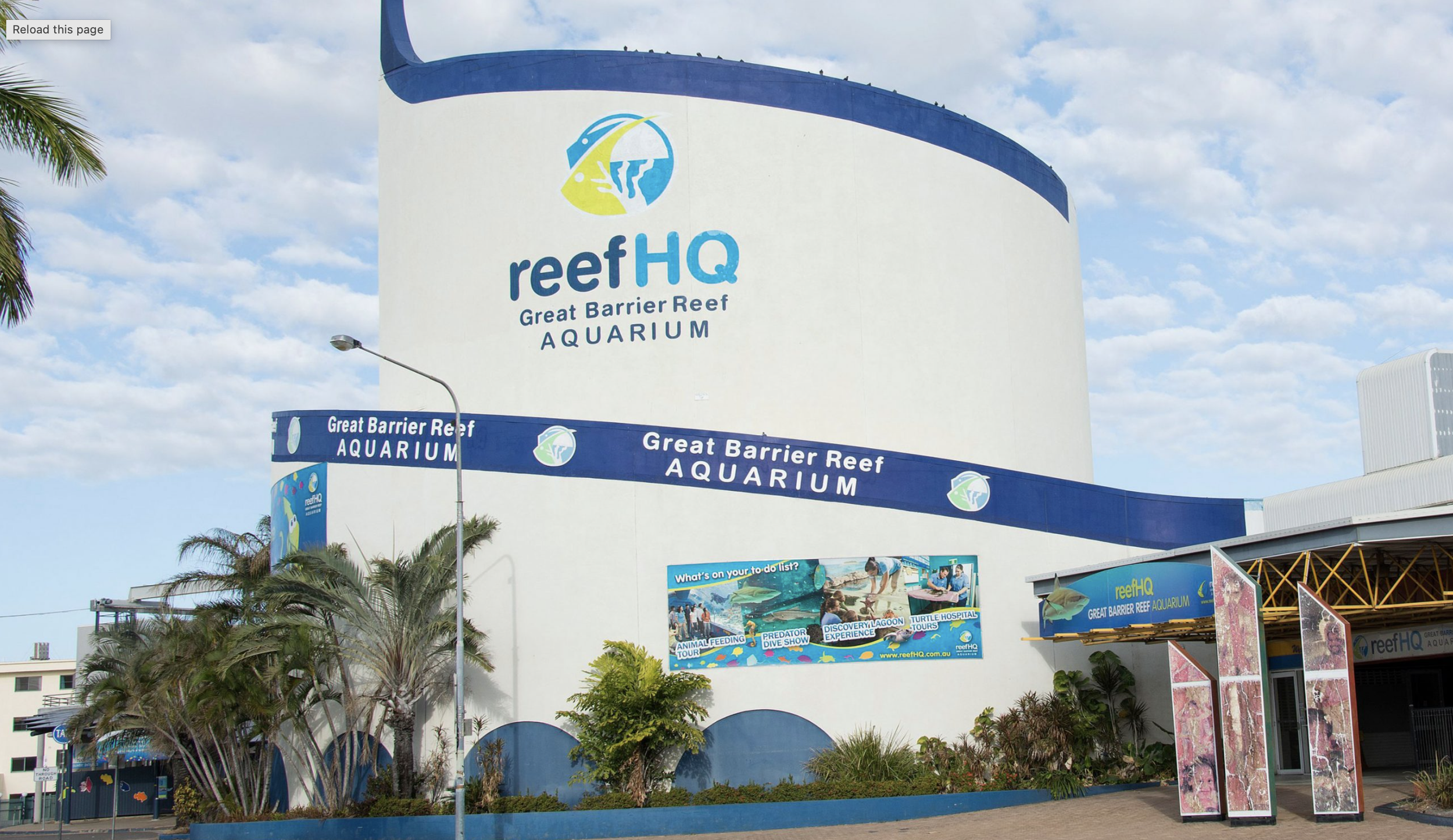
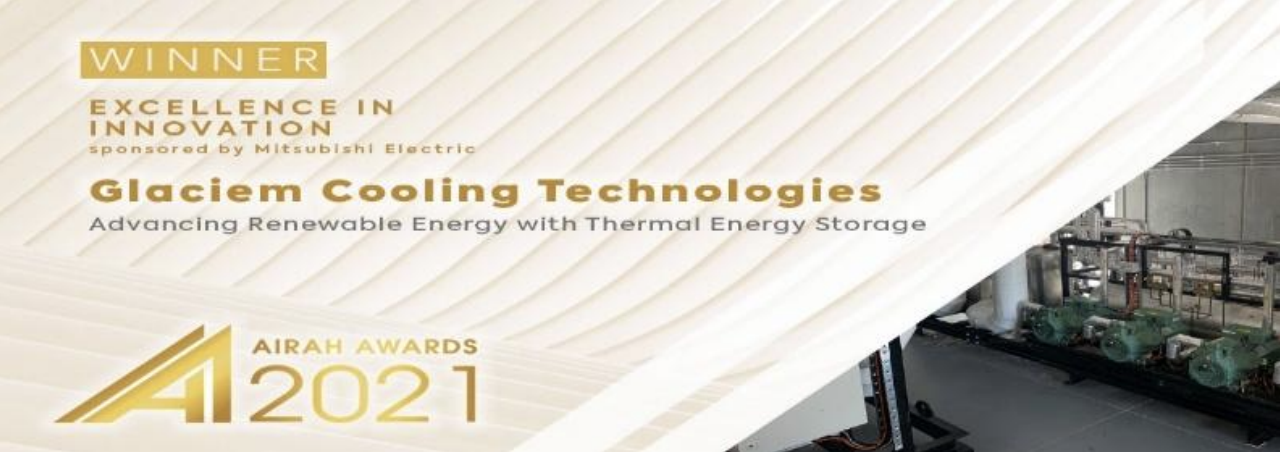
As part of the ARENA-funded Advancing Renewables with Energy Storage program, the Reef HQ project received significant national recognition at the 2021 AIRAH Awards, winning both the Innovative Use of Renewable Energy in HVAC&R Award and the Excellence in Innovation Award. These awards acknowledged the project’s successful integration of CO₂ heat-pump technology, thermal-energy storage and advanced controls to maximise renewable-energy utilisation in a sensitive, continuously-operating public aquarium environment.
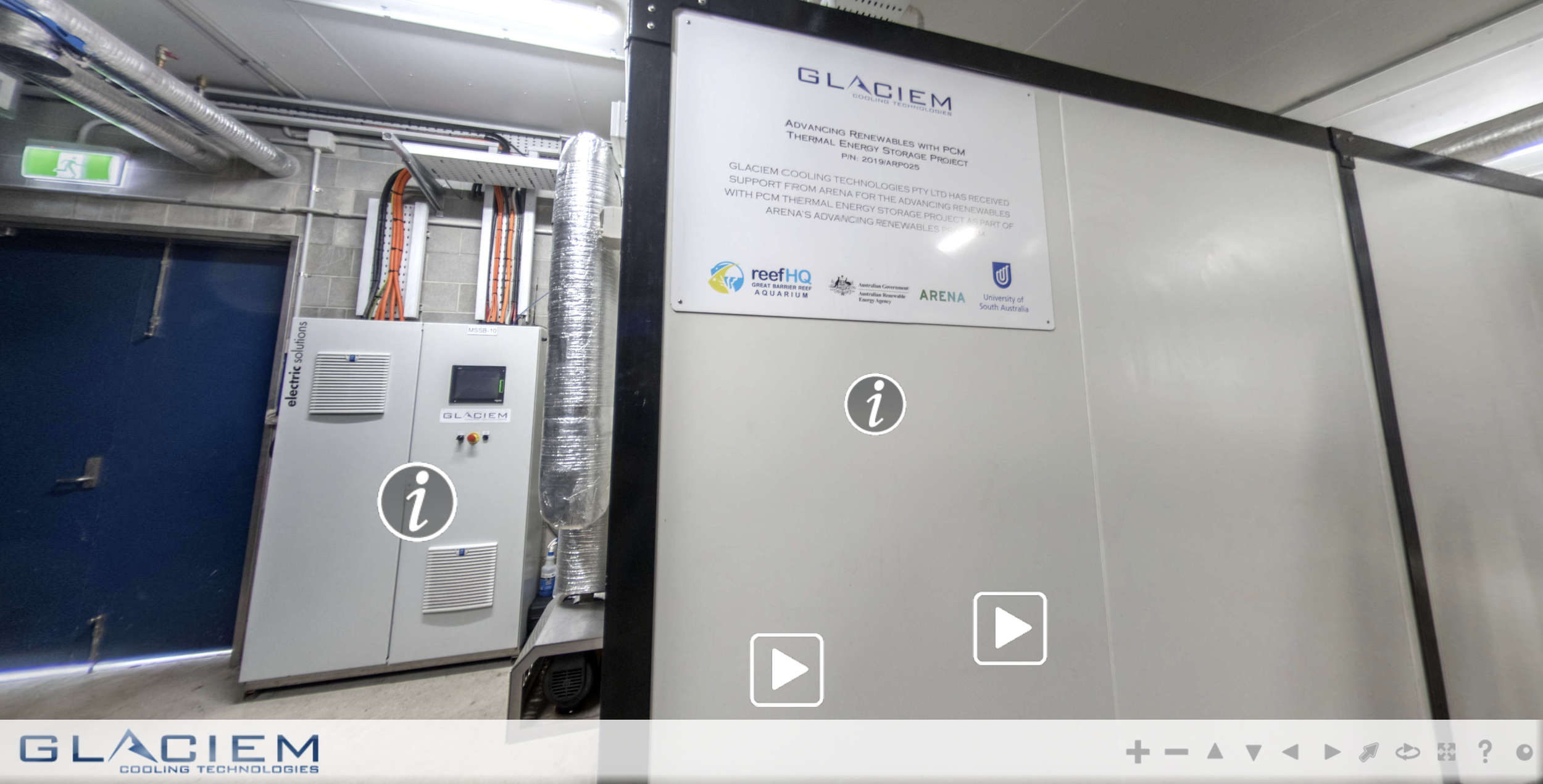
A virtual walkthrough of the completed installation is available here
125kW Cooling
148kW Heating
1x Thermcold DYN 420 PCM Energy Storage 1MWh
misty downs dairy
Application:
Sector:
Process Cooling
Process Cooling
Technology:
CO₂ Heat Pump / PCM TES
date:
2019/20
Project aim is to reduce milk spoilage by rapid cooling of milk, reduce grid electricity reliance, increase energy efficiency.
This project is funded by Australia-India grant
The aim of the project is to significantly improve the efficiency and reliability of milk handling by rapidly cooling milk to reduce spoilage and maintain product quality. By implementing advanced thermal management technologies, the project seeks to reduce reliance on grid electricity and make better use of the site’s available solar generation.
Increasing the utilisation of onsite solar energy not only lowers operating costs but also enhances the facility’s sustainability by shifting a greater share of its energy demand to renewable sources.
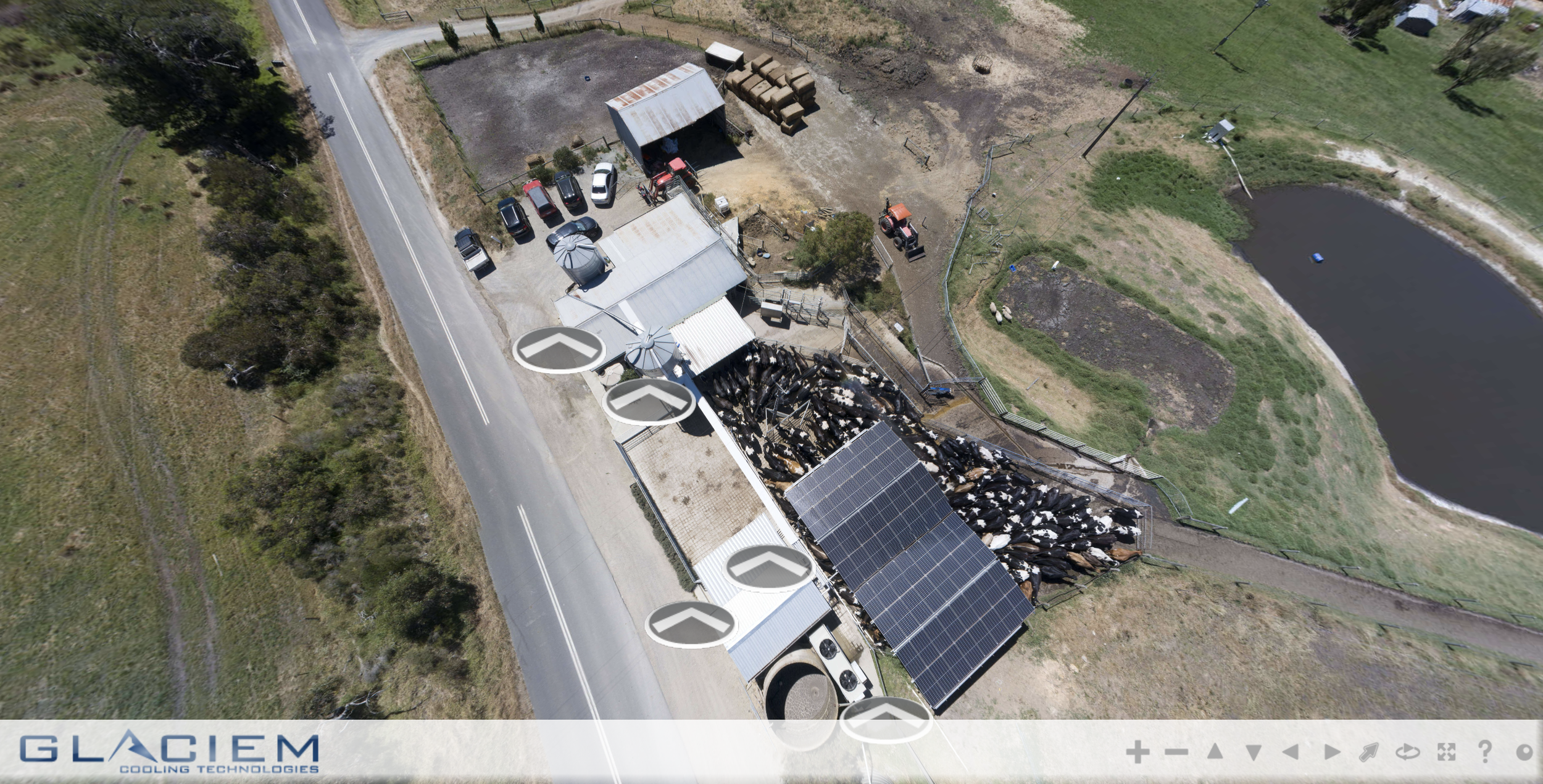
Glaciem delivered a highly efficient thermal energy and hot water system designed to support daily operational demands. It provides a total daily cooling energy capacity of 283 kWh, supported by a 20 kW solar PV system that helps offset grid electricity use. The PCM thermal energy storage system offers 293 kWh of storage capacity, enabling greater utilisation of renewable energy throughout the day.
The installation delivers a CO₂ heat pump having 43 kWr of cooling capacity and 48 kWr of heating capacity: producing up to 1,000 litres of 80°C hot water each day. Together, these integrated capabilities enhance energy efficiency, improve system resilience, and reduce operational costs for the facility.
Our solution
View virtual tour here
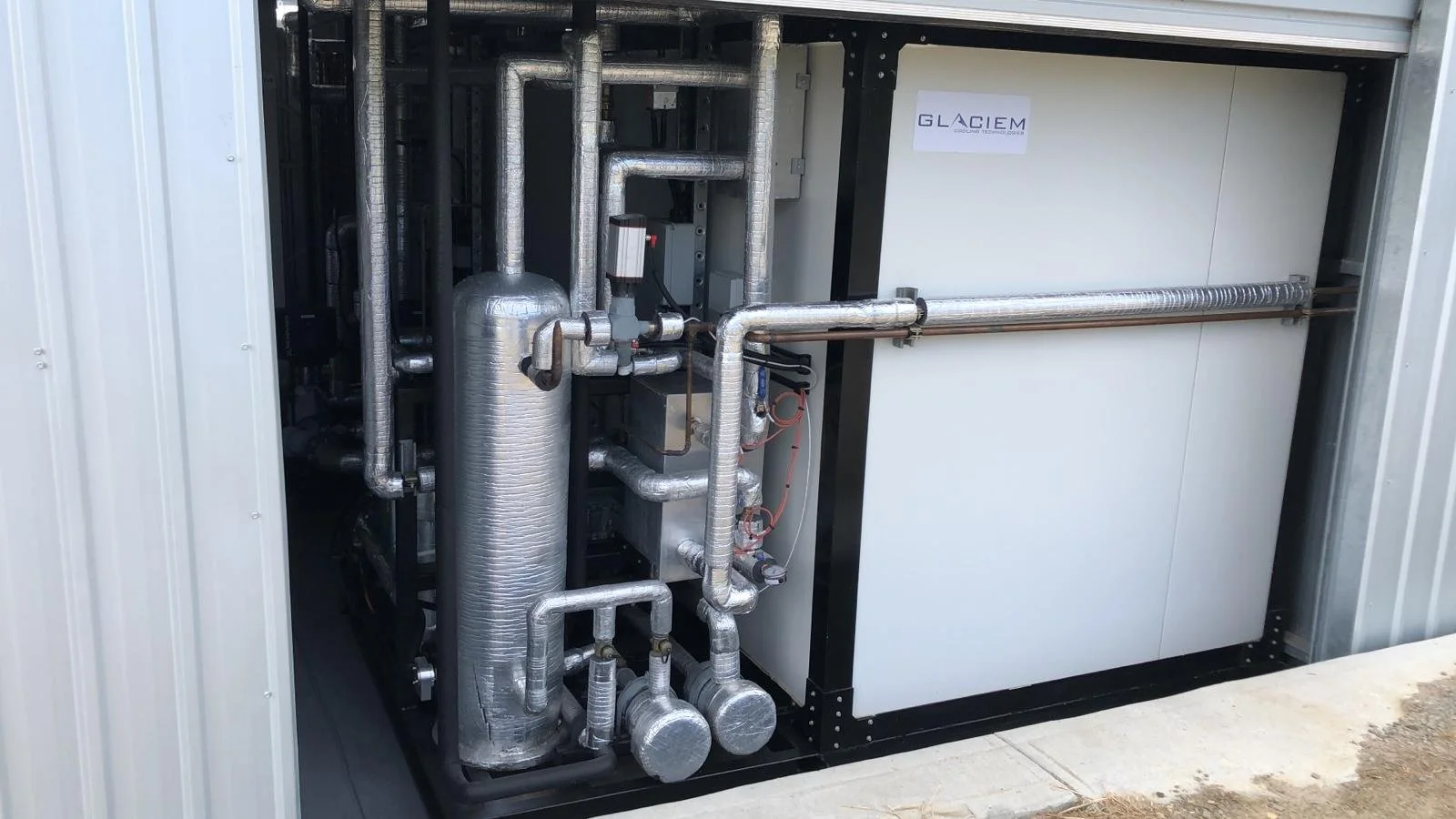
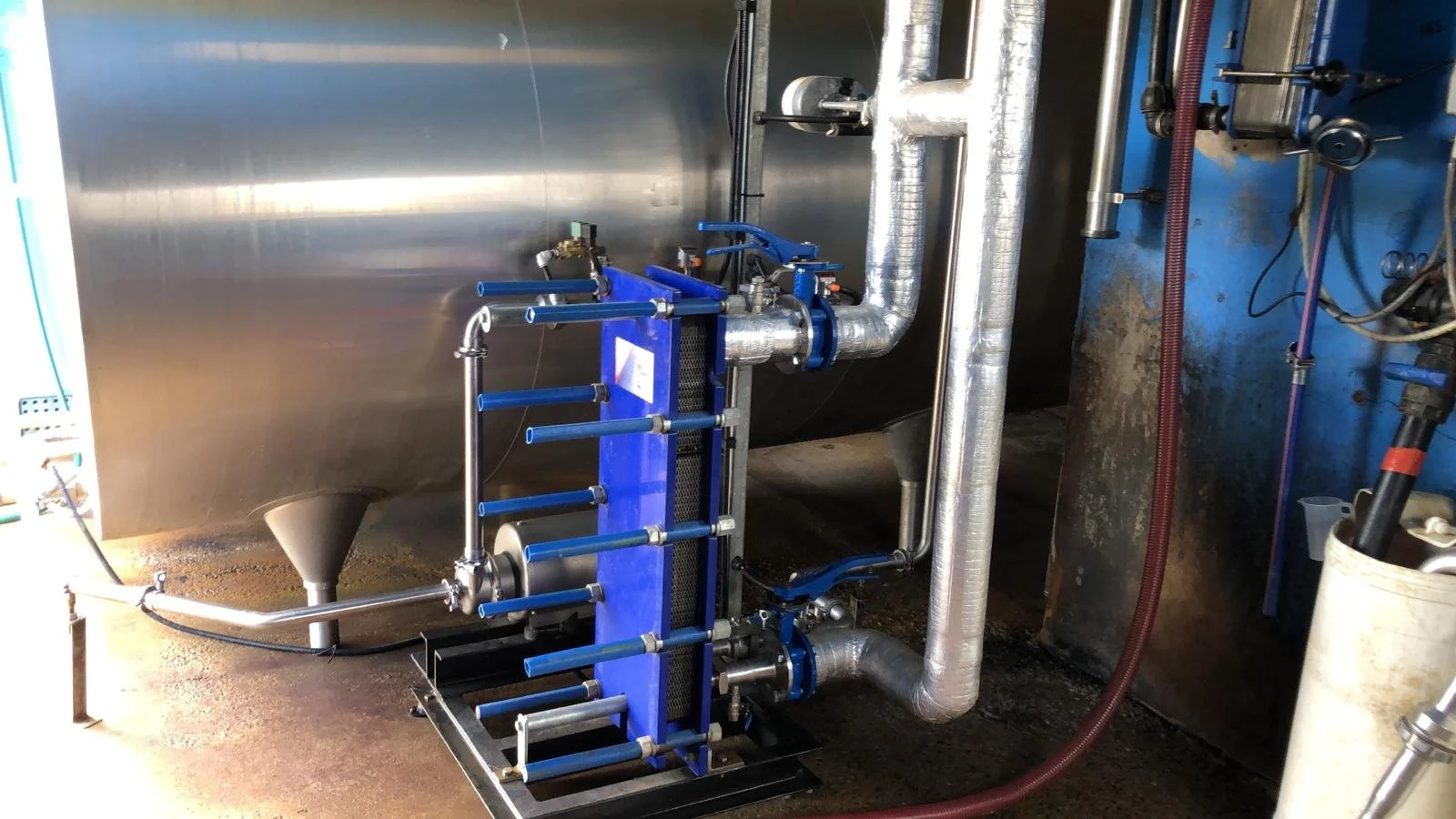
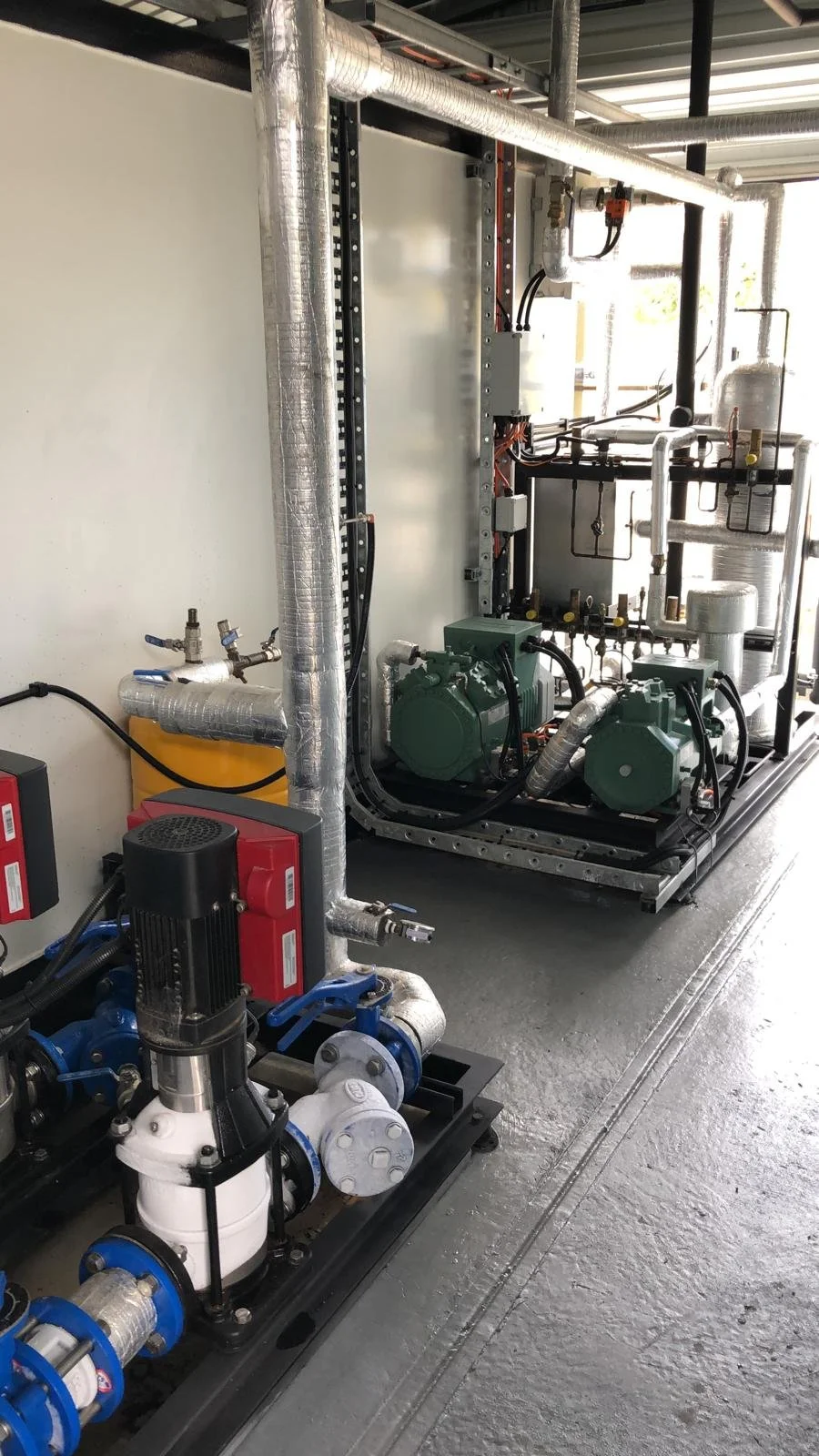
43kW Cooling
48kW Heating
PCM Energy Storage 283Wh
murray river organics
Application:
High Capacity Blast Freezer for Dried Fruit
Sector:
Process Cooling
Technology:
-25°c Flooded Cascade CO2
date:
2019
The project aims to replace the outdated R22 (HCFC) refrigeration systems with modern, lowGWP technology to ensure compliance while significantly reducing the site’s overall carbon footprint. By shifting away from high emission refrigerants, the facility also reduces future exposure to rising HFC levies, which continue to increase as part of environmental regulations.
At the same time, the upgrade focuses on improving system efficiency to lower energy consumption and operating costs, delivering a strong financial payback alongside substantial environmental benefits.
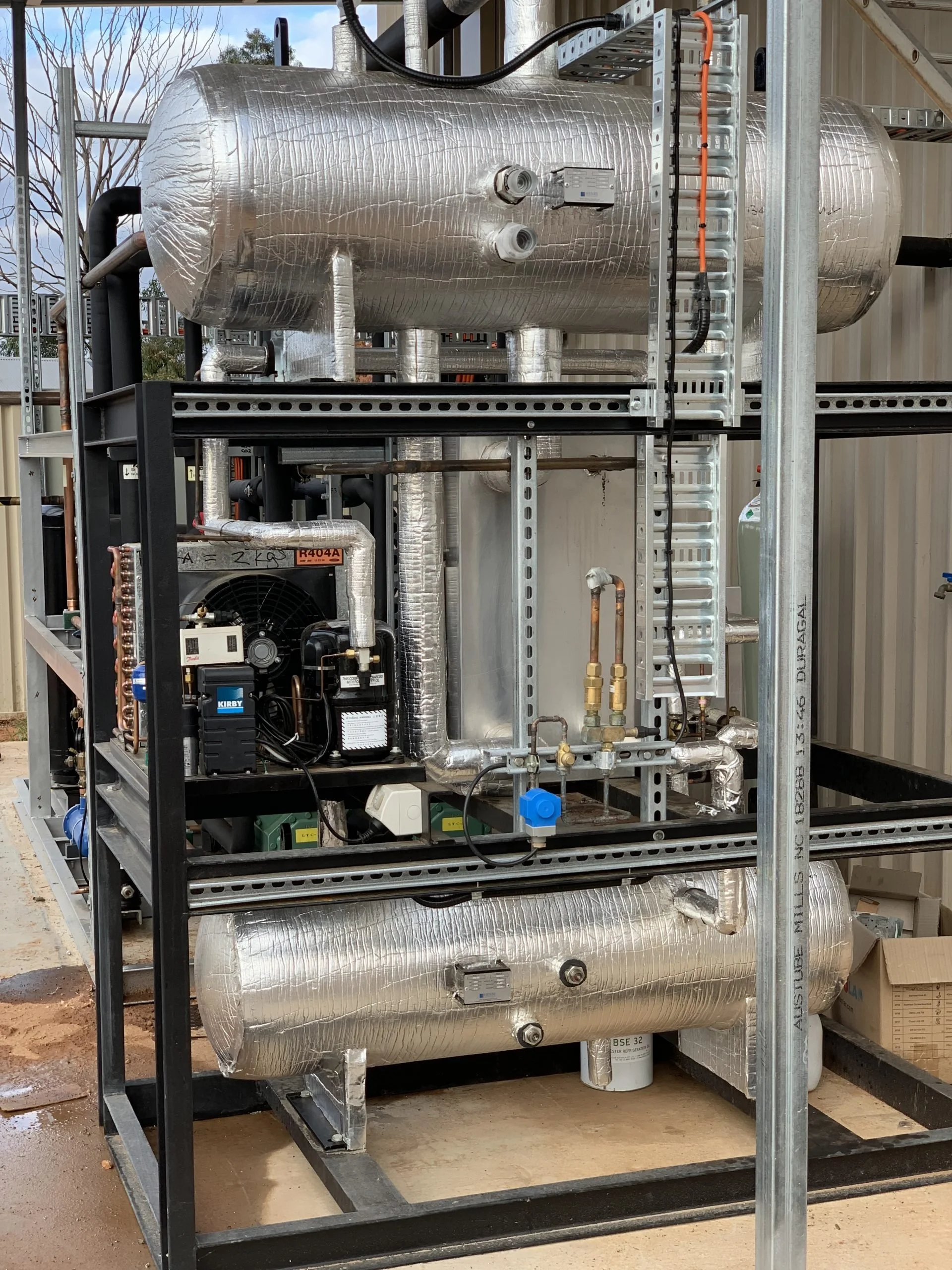
The project was successfully completed, delivering a high capacity blast freezer designed to meet demanding low temperature production requirements. The system operates using a –25°C, 70kWr flooded cascade CO₂/R134a configuration, ensuring rapid product pulldown, stable temperature control, and high operational efficiency. The system provides reliable performance and improved energy efficiency of the refrigeration system.
our solution
‘the bend’ motorsport park
Application:
Freezer & Coolroom
Sector:
Cold Storage
DPCO₂ Refrigeration
-6 degrees C PCM
Technology:
date:
2019
The project’s primary objective was to install an efficient, environmentally friendly refrigeration system to service a 10 m ² freezer and multiple cool rooms supporting the commercial kitchen, dining areas, and hotel facilities at The Bend Motorsport Park in Tailem Bend, South Australia
Supported in part by the South Australian Government through TechInSA, the project was established as a commercial demonstration of more sustainable cooling technologies for high-load hospitality environments. The upgrade focused on improving reliability, reducing environmental impact, and delivering measurable energy-efficiency gains across the site’s kitchen and hotel operations.
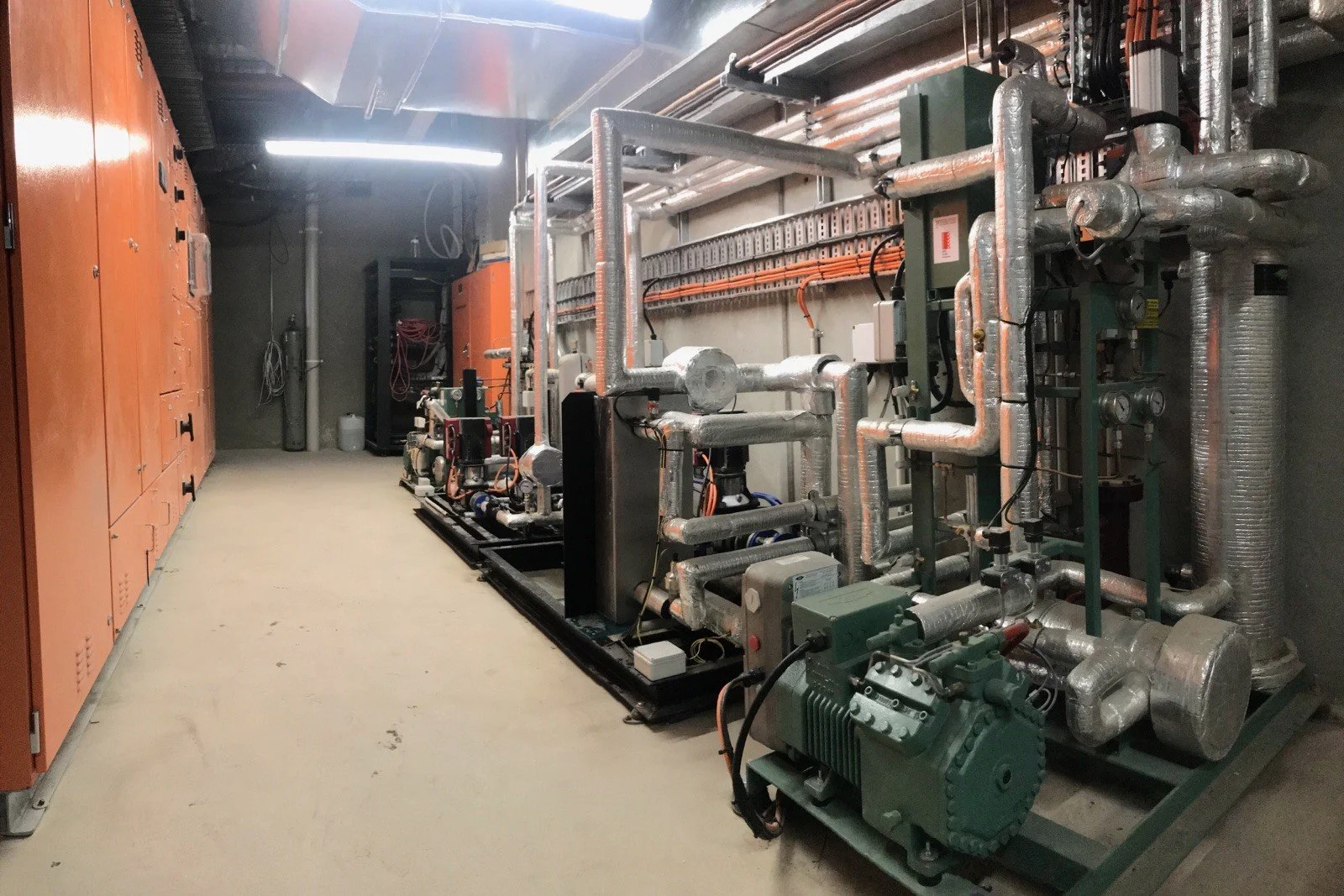
To achieve this, the client participated in a trial deployment of Glaciem’s Dew Point CO₂-only (DPCO₂) refrigeration system, integrated with a phase-change thermal-energy storage (TES) solution. The TES was charged exclusively by the CO₂ system using HC30 heat-transfer fluid, operating predominantly on off-peak electricity to reduce demand and operating cost. The stored cooling was then delivered to the cool rooms via HC20, providing stable, efficient cooling throughout the day.
The low-temperature freezer was served by a DX CO₂ cascade system, with HC30 used on the LT cascade side to maximise heat-transfer efficiency and maintain low discharge temperatures. Together, these technologies demonstrated a fully electric, low-emissions alternative to conventional refrigeration systems, showcasing a scalable pathway for sustainable cooling in commercial hospitality settings
Our solution
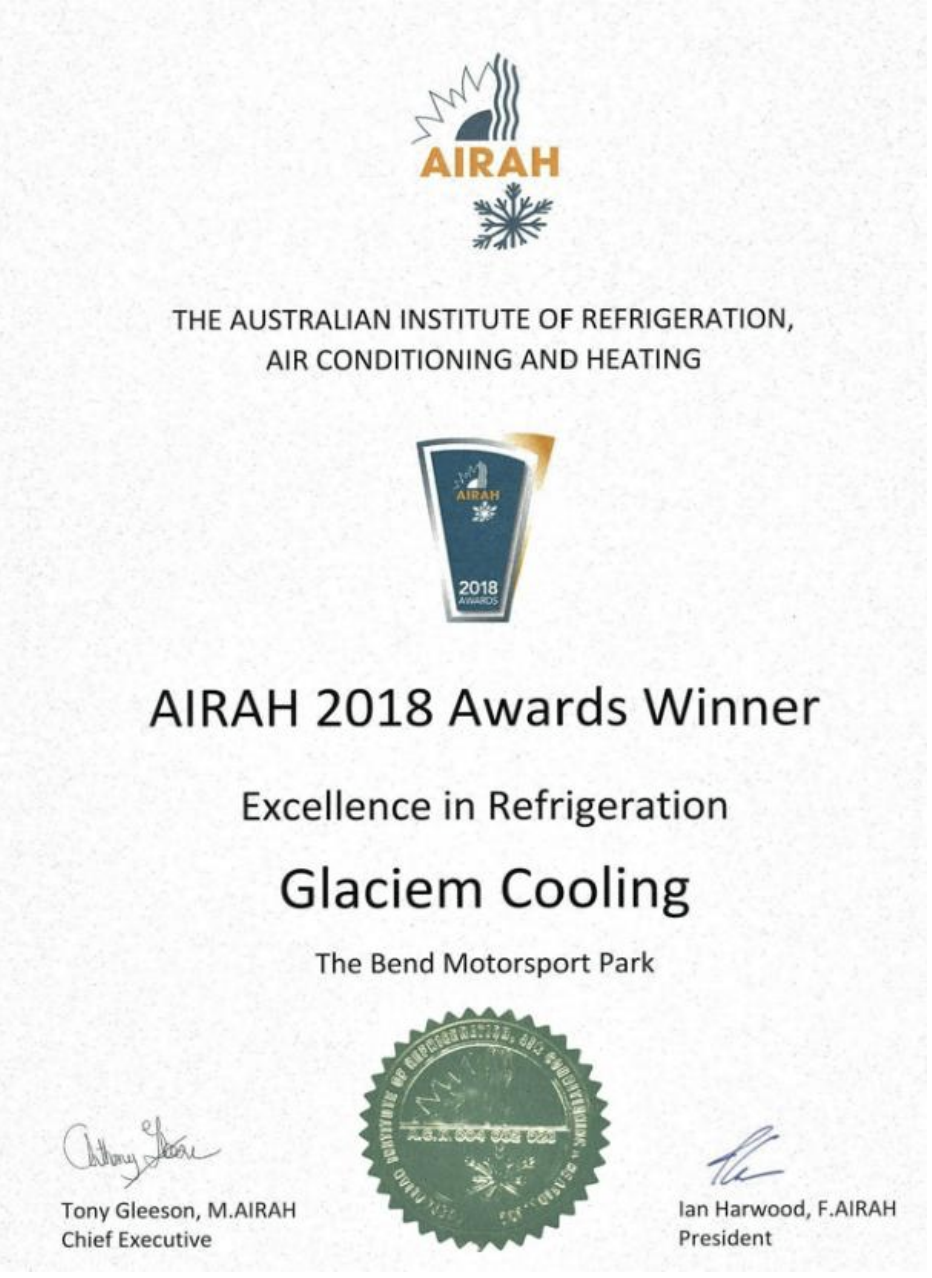
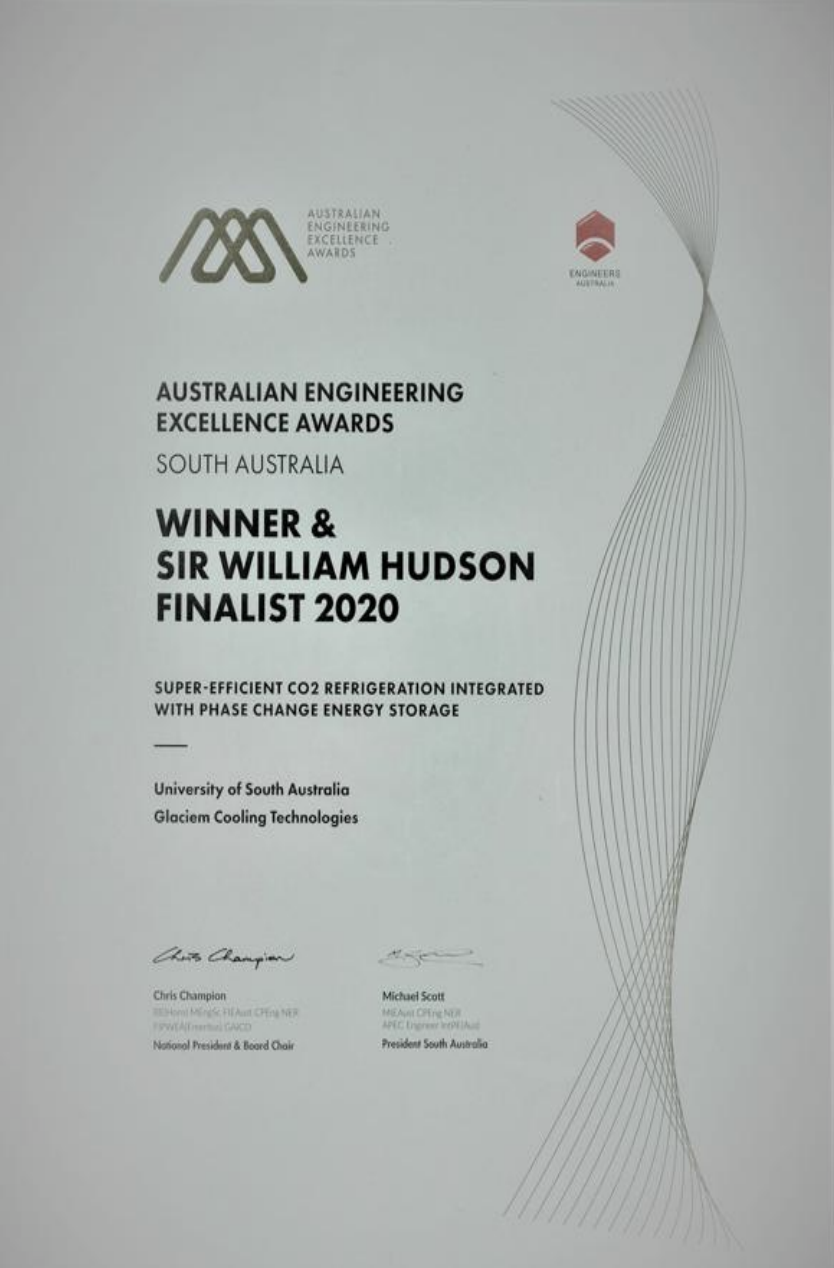
The project received significant industry recognition, winning the Engineers Australia – Australian Engineering Excellence Award 2020 (South Australia) and being named a Finalist for the Sir William Hudson Award 2020. The system was also recognised earlier at the 2018 AIRAH Awards for its innovative and sustainable approach to commercial cooling.