
CO₂ Heat pumps
How do they work?
-
A heat pump is a device that transfers heat energy from a source of heat to a heat sink.
In many industrial processes, heat pumps are applied to recover process waste heat. They are used in dehumidifaction, distillation and evaporation processes, and also for water heating and combined heating and cooling. There are major opportunities in the food and chemical industries.
Large heat pumps in commercial/institutional buildings use water loops (hydronic) for heat and cold distribution, so they can provide heating and cooling simultaneously.
Glaciem specialise in Commercial and Industrial Heat Pump applications.
-
If your business is using gas to heat water, you should consider a CO₂ Heat Pump! If your business also has a cooling requirement, you can drive further efficiencies.
For example, indoor swimming pools can heat water in pools and, depending on the configuration, provide some concurrent cooling to the indoor air space.
Hotels can potentially provide hot water for guests and provide concurrent cooling to chilled water systems for cooling rooms.
Food processing facilities such as dairies can generate industrial grade hot water for cleaning while cooling down their milk!
Heat pumps are an extremely flexible technology. Glaciem specialise in determining how they can best help your business!
-
The Coefficient of Performance (COP) is a measure of how much useful thermal work is done by a machine per unit of energy invested.
For example:
Common electrical water heaters in most houses have a COP of ~1
Gas fired water heaters commonly have a COP of ~0.85
A heat pump for heating water can have a COP exceeding 5!
-
Many businesses use gas water heating systems that were installed while gas was cheap. Gas pricing is now reaching parity with electricity in many global markets.
The huge gains in COP means that switching over to an electric driven CO₂ heat pump can produce significant savings.
Glaciem Solutions - CO₂ Heat Pumps
High quality, High Efficiency CO₂ Heat Pumps for many commercial and industrial applications.
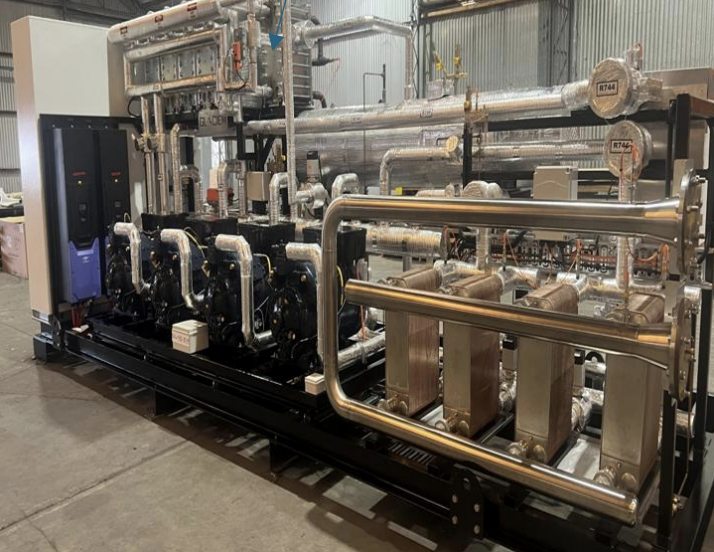
Harness CO₂‘s extraordinary capacity for heat transfer

Generate hot water as a by product of cooling

Eliminate the need for electric or gas fired hot water generation

Backed by extensive Research and Development

Supported with expert design, comissioning and advice